

Cape Town occupies a peculiar geological and cultural crossroads: a city pinned between two oceans and an ancient sandstone massif referred to as Table Mountain, as if the continent itself wanted a dramatic frontispiece before the rest of Africa unfurled northward. Table Mountain presides over the metropolis of Cape Town with the flat, imperturbable expression of something that has seen empires arrive by sail and depart in disgrace. Below it, the city layers Dutch mercantile ambition, British colonial administration, forced removals, and a syncretic culture into a singular, though still frequently antagonistic, urban fabric.
It is a place that photographs beautifully and complicates itself the moment you look closer — which is, one suspects, precisely the point. What follows is a modest cartography of the complexity of Cape Town, a geologically stunning city nevertheless compromised by economic and racial divisions fostered by its recent colonial past. It nevertheless remains one of the world’s most intriguing and spectacular travel destinations.
Popular Sites
Table Mountain
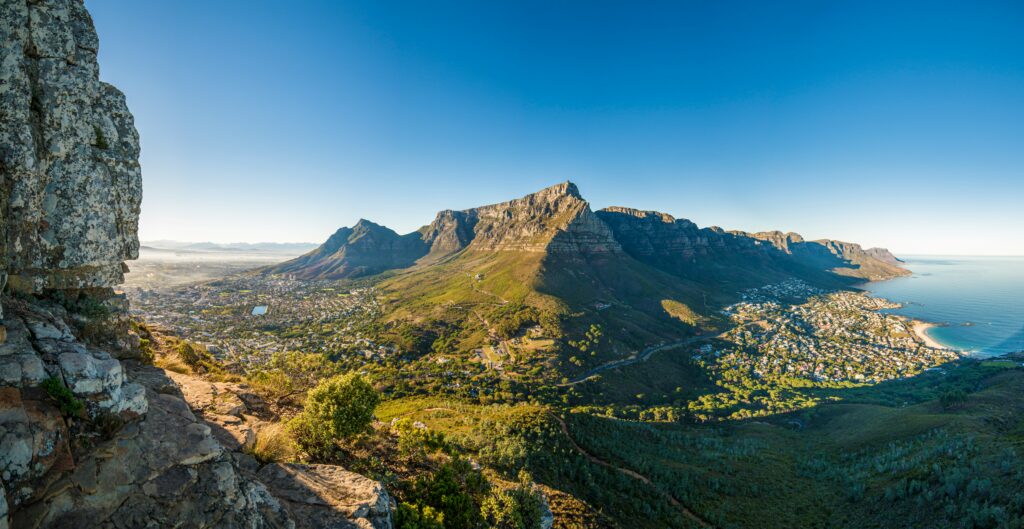
Roughly six hundred million years old, this flat-topped sandstone predates the Himalayas, the Andes, and most reasonable claims to geological modesty. Long before it acquired its European name, the Khoikhoi called it Hoerikwaggo — “mountain in the sea” — and used its slopes for grazing and shelter centuries before Portuguese navigator Antonio de Saldanha became, in 1503, the first recorded European to climb it, allegedly just to see what the fuss was about.
The mountain’s flat summit forms a distinctive plateau roughly three kilometers long, capped by sandstone laid down when this stretch was still an ocean floor. Its slopes host the Cape Floral Kingdom, the smallest and most biodiverse of the world’s six floral kingdoms, packing over two thousand plant species into an area smaller than greater London; a fact that makes the mountain less a scenic backdrop than a living archive of deep time, a source of deep fascination for resident botanists.
The city at Table Mountain’s base owes its very existence to the mountain’s freshwater streams, which drew Dutch East India Company commander Jan van Riebeeck to establish a refreshment station here in 1652, making Cape Town the oldest colonially founded city in South Africa and, not incidentally, the reason an entire nation’s history now radiates outward from this one mountain’s foot. The distinctive cloud formation that frequently drapes the summit — locally called the “tablecloth” — has its own bit of colonial folklore attached: legend holds it originates from a smoking contest between a Dutch pirate, Jan van Hunks, and the Devil himself, a story with rather more whimsy than most tales colonialism tends to produce.
Robben Island
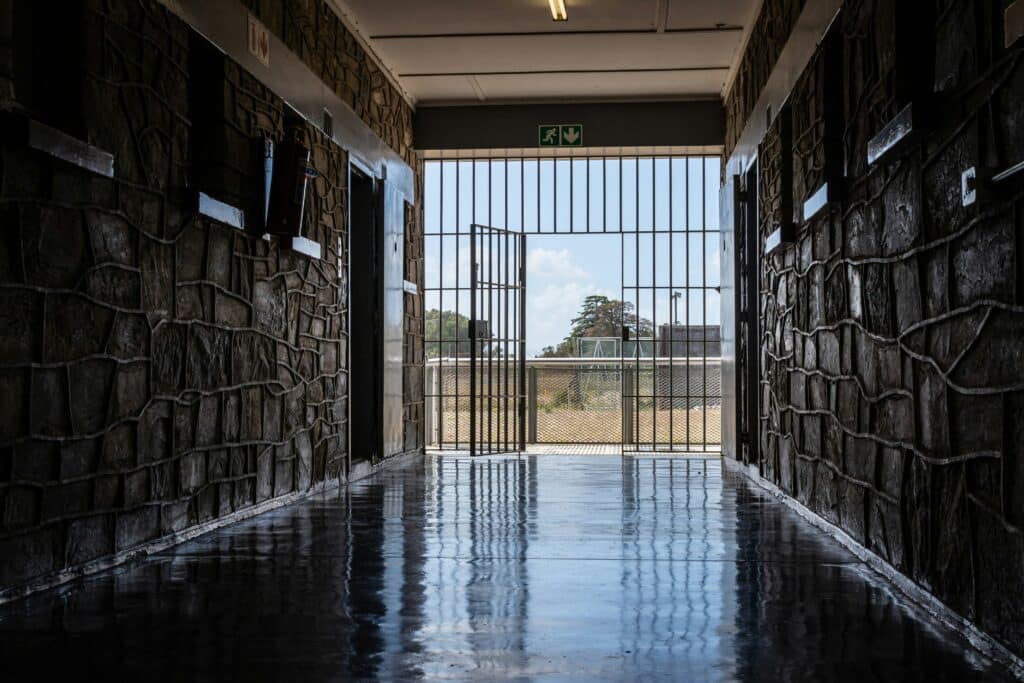
Long before its twentieth-century notoriety, Robben Island served the Dutch East India Company as a place of banishment for those deemed inconvenient to colonial order; similar to the British East India Company’s relationship to Australia.
Before its political notoriety, the island’s leper colony operated from the 1840s until 1931, forcibly confining patients under conditions historians now describe as scarcely distinguishable from imprisonment, a grim continuity the apartheid government seemed almost to honor when it repurposed the same isolation for dissidents decades later.
Its transformation into a maximum-security prison for political dissidents came under apartheid, when the National Party used the island’s isolating geography as a deliberate instrument of psychological as much as physical confinement. Nelson Mandela arrived in 1964 and spent eighteen years quarrying limestone under a punishing sun that would permanently damage his eyesight, an injury he sustained in service of a struggle the island was explicitly designed to smother. That the prison instead became a crucible for the liberation movement’s leadership stands as one of history’s more pointed ironies. The island’s UNESCO World Heritage listing arrived in 1999, five years after South Africa’s first democratic election.
District Six Museum
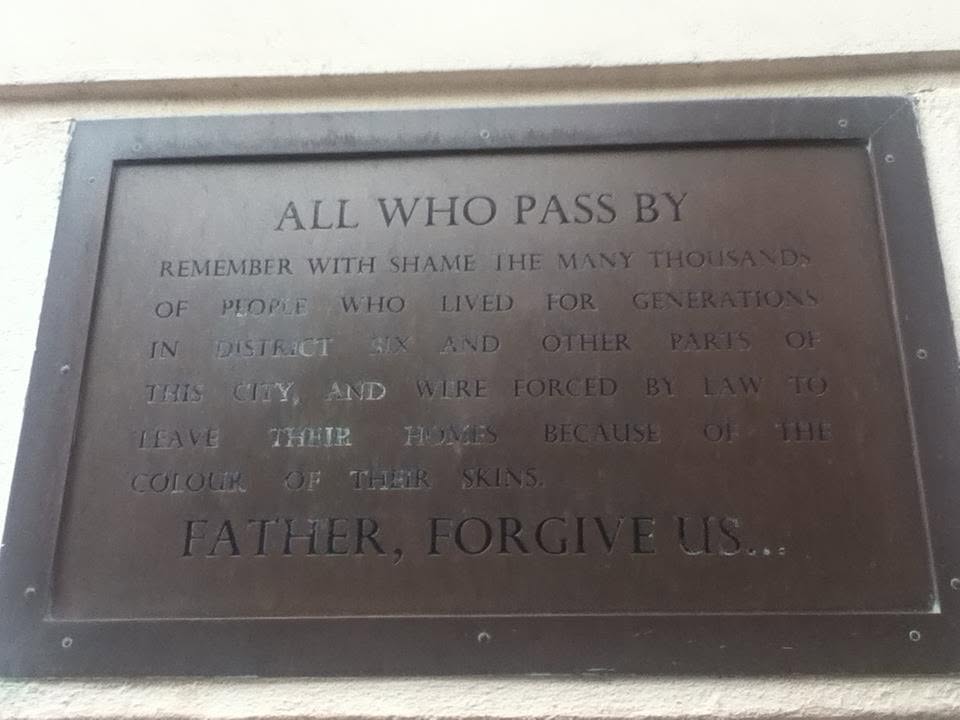
Established in 1867 as the sixth municipal ward of Cape Town, the district was, from its earliest decades, a genuinely cosmopolitan working quarter: freed slaves, Malay artisans, Jewish merchants, and immigrant laborers sharing tenements in a density that planners would later cite, with breathtaking cynicism, as justification for its destruction.
In 1966 the government declared it a whites-only area under the Group Areas Act; over the following sixteen years, bulldozers leveled some 60,000 residents’ homes, scattering families to the distant, wind-scoured townships of the Cape Flats while the cleared land was, with a cruelty that reads almost as satire, left largely undeveloped for decades afterward. Post-apartheid land restitution claims began in the 1990s, promising former residents and their descendants the right to return; three decades on, the pace of actual rebuilding has been so glacial that reconciliation, in this particular patch of ground, remains considerably more aspiration than accomplished fact.
The museum, opened in 1994 in a former Methodist mission church, preserves street signs salvaged before demolition and a vast floor map on which former residents have hand-annotated the location of homes that no longer exist.
Kirstenbosch National Botanical Garden
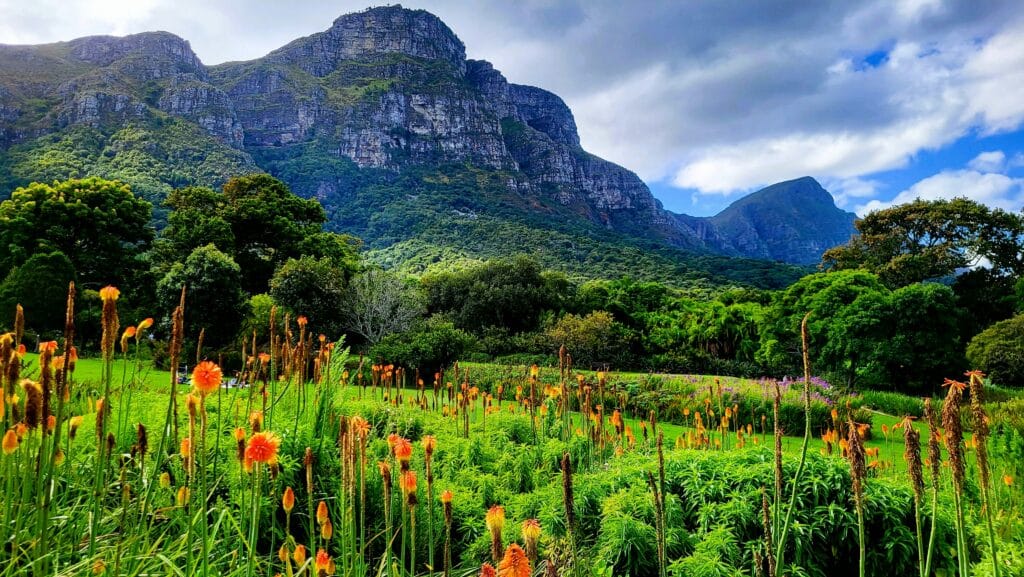
Established in 1913 on land once farmed by Cecil Rhodes, who bequeathed the estate to the nation shortly before his death, Kirstenbosch was the vision of botanist Harold Pearson, who died within two years of founding it and is buried, fittingly, within its grounds. It holds the distinction of being the first botanical garden in the world established specifically to cultivate and preserve a country’s indigenous flora, rather than to import exotic specimens for colonial curiosity; a comparatively enlightened premise for its era, even if the land’s earlier ownership carries the usual complicated colonial residue.
Cape Point and the Cape of Good Hope
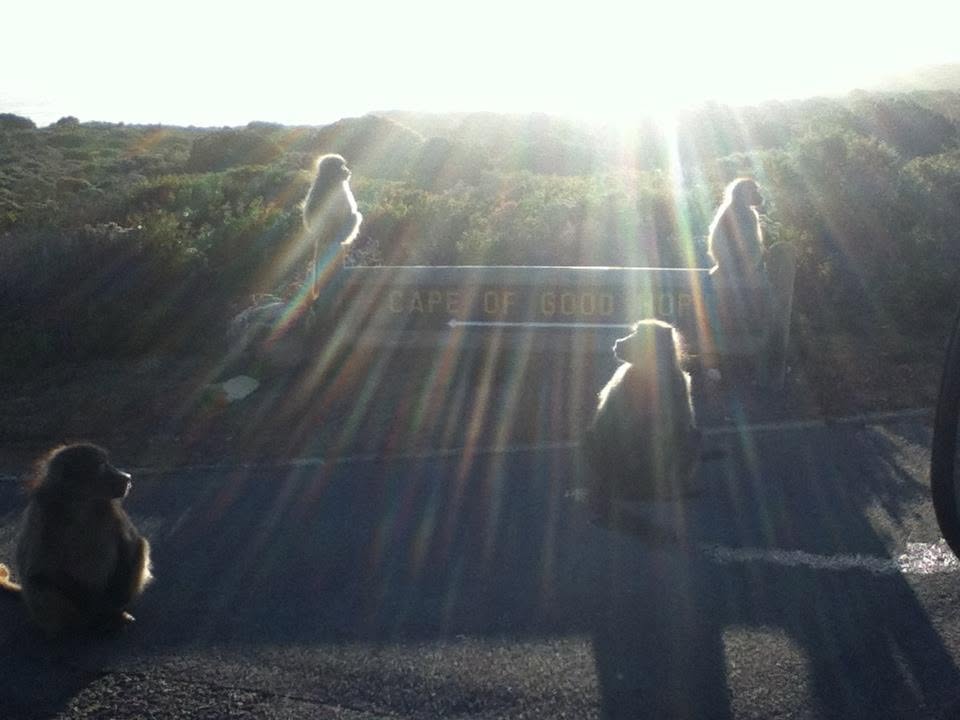
Portuguese navigator Bartolomeu Dias first rounded this headland in 1488, naming it the “Cape of Storms” with the bluntness of a man who had just nearly died there; the Portuguese crown, eager for better publicity ahead of the lucrative sea route to India, rebranded it the “Cape of Good Hope” shortly thereafter, one of history’s earliest recorded instances of corporate rebranding.
The original lighthouse at the Cape of Good Hope, built in 1860 near the point’s highest elevation, proved so frequently shrouded in low cloud that ships kept wrecking anyway, prompting engineers to build a second, lower lighthouse in 1919. Sailors passing this coast have long traded tales of the Flying Dutchman, a ghost ship supposedly doomed to sail these waters eternally after its captain defied a storm and God in equal measure, never permitted to make port. The point’s resident chacma baboon troops, meanwhile, have grown sufficiently habituated to tourists that rangers now spend more time managing baboon-related car break-ins than shipwreck folklore
The waters offshore have claimed an estimated three thousand shipwrecks over five centuries, a toll grim enough that the area’s reputation for maritime menace outlasted the optimistic rebrand by several hundred years. Long before any of this, the Khoikhoi had inhabited and hunted across this peninsula for millennia, entirely unbothered by Europe’s need to name it twice.
Adventure Experiences
Shark Cage Diving in Gansbaai
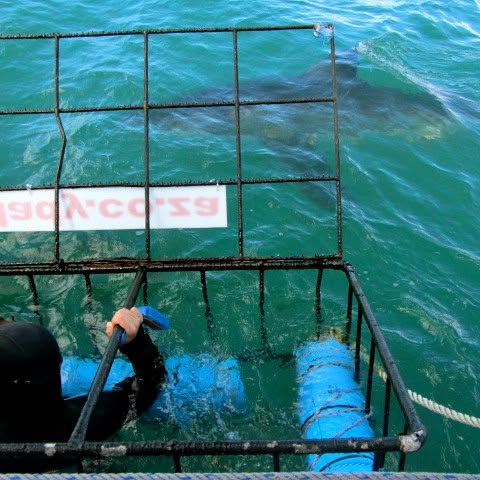
A ninety-minute drive delivers you to “Shark Alley,” where a steel cage, a wetsuit, and considerably less courage than advertised are all that separate you from a great white shark’s black-eyed unblinking appraisal. It is, without exaggeration, the closest most people will come to being genuinely regarded as prey.
Paragliding off Lion’s Head or Signal Hill
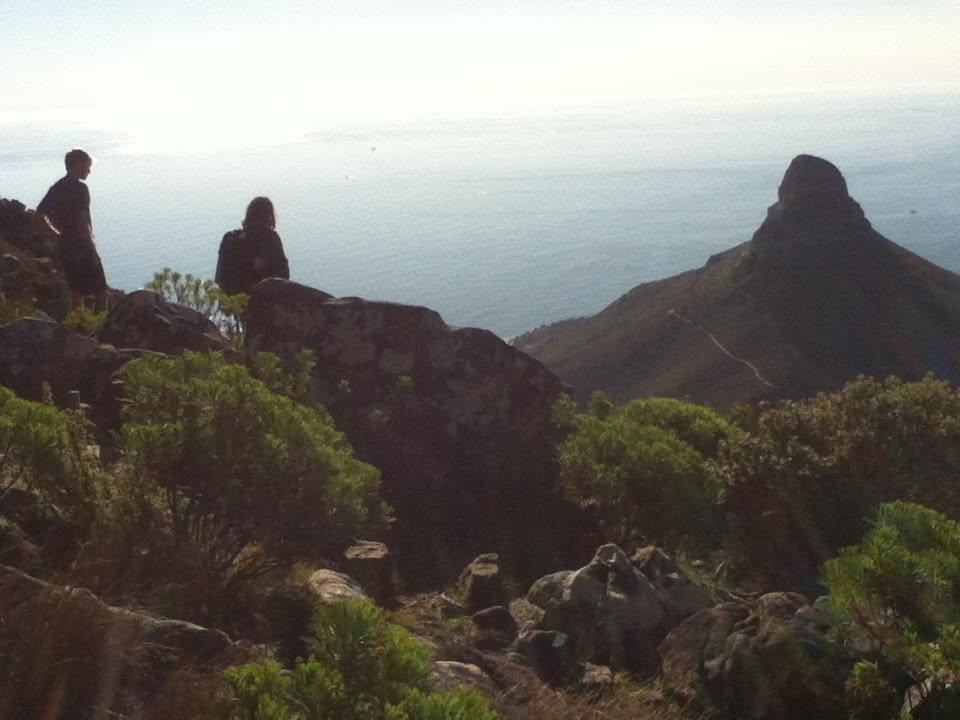
Tandem flights launch from these lower peaks on clear, wind-cooperative days, delivering aerial views of the Atlantic seaboard that no drone photograph quite replicates, if you can ignore the small, insistent voice questioning the structural integrity of nylon.
Rappeling Table Mountain
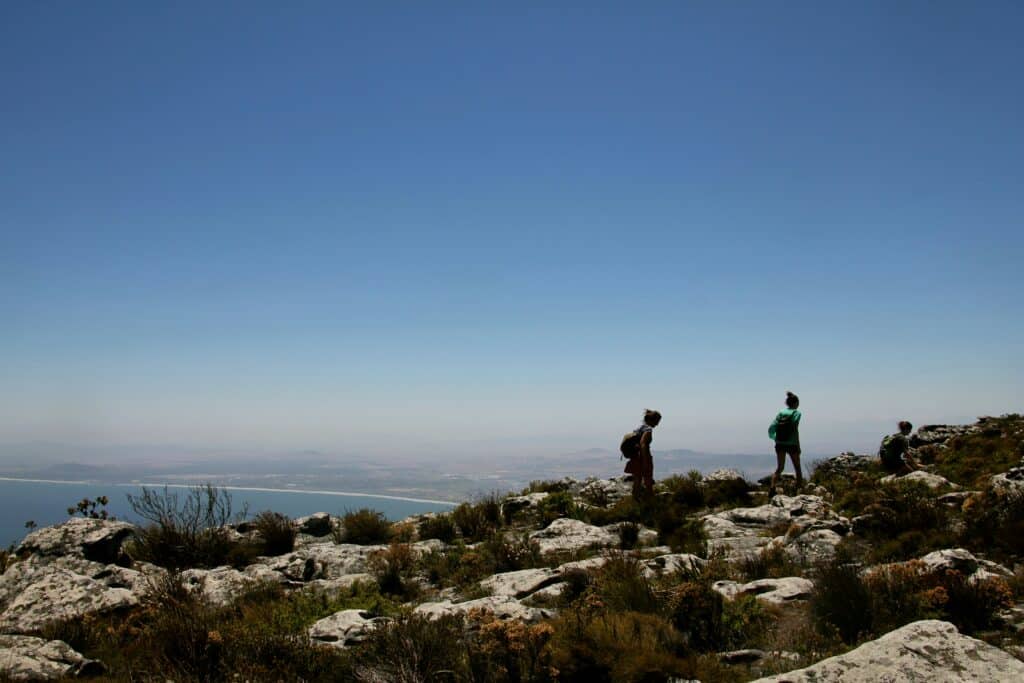
Billed, with typical local understatement, as one of the world’s highest commercial abseils — roughly one thousand meters of cable-assisted descent down sheer rock face. Recommended for those who found the cable car insufficiently terrifying.
Sandboarding the Atlantis Dunes
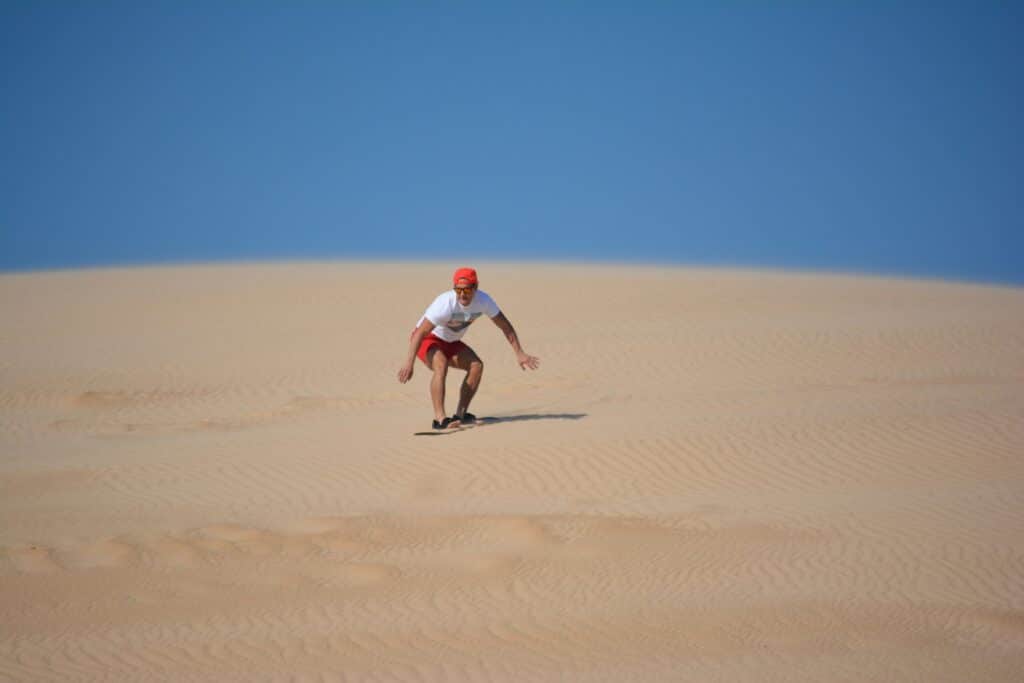
An hour north of the city, ancient dune fields offer a drier, sandier cousin to snowboarding, with rather more spectacular wipeouts and considerably less risk of frostbite. A fine antidote to anyone who has grown smug about their skiing.
Four Unique Culinary Dishes
Bobotie
A Cape Malay classic of spiced, curried minced meat baked beneath a golden egg custard, typically accompanied by yellow rice and chutney. It tastes, roughly, like what would happen if a shepherd’s pie and a curry fell deeply and permanently in love.
Cape Malay Curry
Fragrant with cinnamon, cardamom, and turmeric, this curry tradition arrived with enslaved cooks from Southeast Asia and evolved into something distinctly, unmistakably Capetonian — sweeter and more aromatic than its subcontinental cousins, and entirely unbothered by that distinction.
The Gatsby
A colossal, artery-testing sandwich native to the Cape Flats, stuffed with chips, meat (often masala steak or polony), and sauce, then sliced into shareable portions — theoretically. In practice, sharing is a courtesy most visitors abandon by the second bite.
Grilled Snoek
A firm, oily fish hauled from the cold Atlantic waters and traditionally braaied over open coals, basted with apricot jam — a combination that sounds like a culinary dare and performs like a minor revelation.
Six Instagrammable Spots
Bo-Kaap’s Colored House
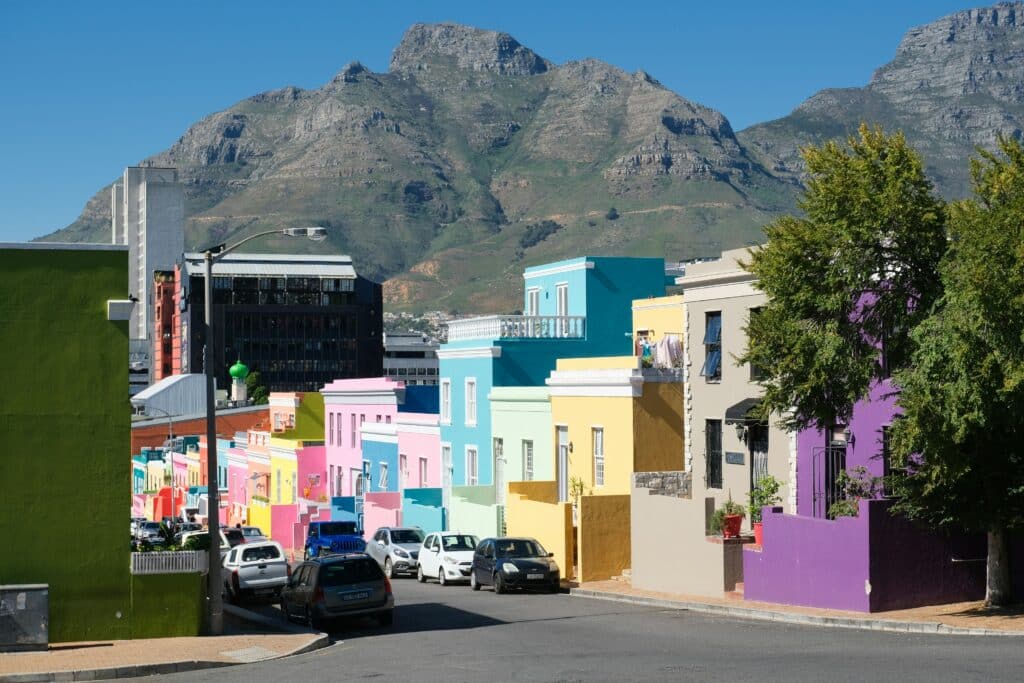
The obvious choice, photographed roughly eleven million times daily, and still, infuriatingly, worth the eleven million and first.
Camps Bay Beach
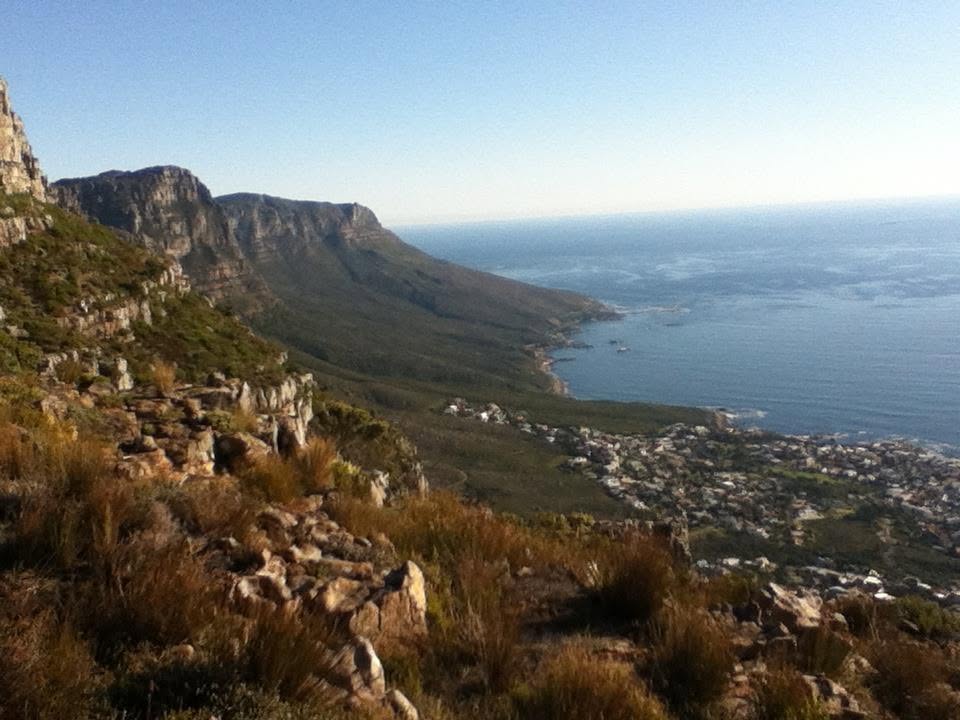
White sand, palm-lined promenade, and the jagged Twelve Apostles mountain range as backdrop: A composition so reliably flattering it borders on cheating.
Boulders Beach
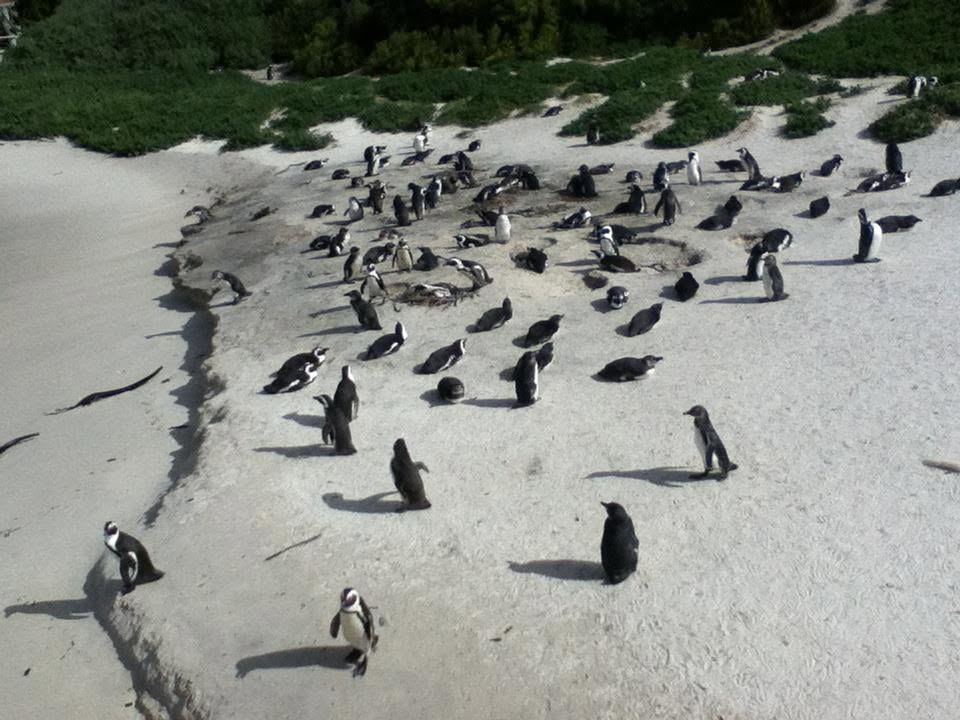
Home to a colony of African penguins entirely unbothered by human spectators, waddling about their granite boulders as if hosting the photoshoot themselves.
Lion’s Head
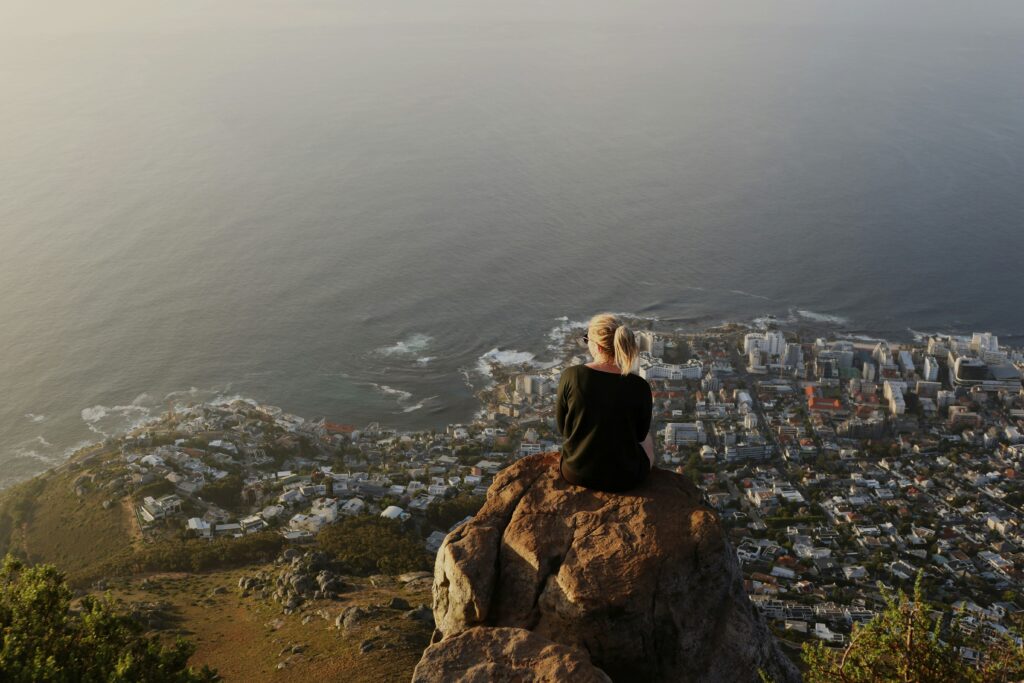
A moderate hike rewarded with 360-degree views of the city, both oceans, and — every full moon — a small army of headlamp-wearing hikers who clearly had the same idea.
Muizenberg’s Beach Huts
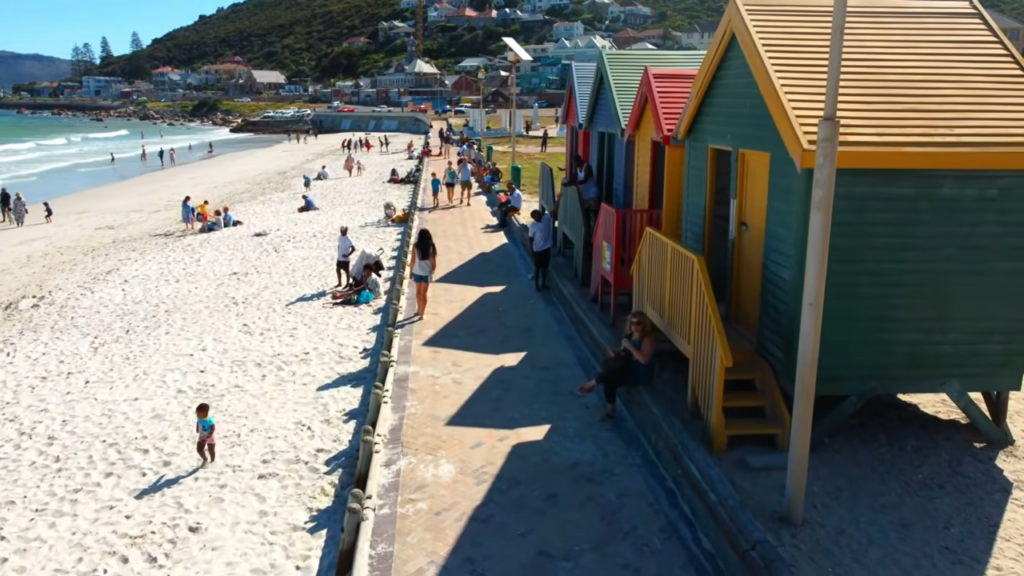
A row of Victorian bathing boxes painted in primary colors along a popular surf beach, forming perhaps the most cheerfully saturated stretch of coastline in the Southern Hemisphere.