

Ireland is small. You can cross it coast to coast in about three hours, which is roughly how long it takes to get served at a Temple Bar counter on a Saturday night. Into that modest footprint the island has packed five thousand years of tombs, castles, monasteries and grievances. It will rain on most of them. Pack a jacket, then pack another, Ireland isn’t a country that requires moisturizer.
This route covers the stops that fill every Ireland itinerary for a reason. It starts in Dublin, heads south through Kilkenny and Cashel to Cork’s Blarney Castle, loops through Kerry, climbs the Atlantic coast to the Cliffs of Moher and Galway, and finishes at the Giant’s Causeway (in Northern Ireland, a separate entity).
Let’s sojourn through Ireland, the Emerald Isle, a land that has viewed firsthand the contention between religious doctrines, but one that nevertheless remains adamantly green and beautiful.
Dublin: Start With the Books, End With the Stout
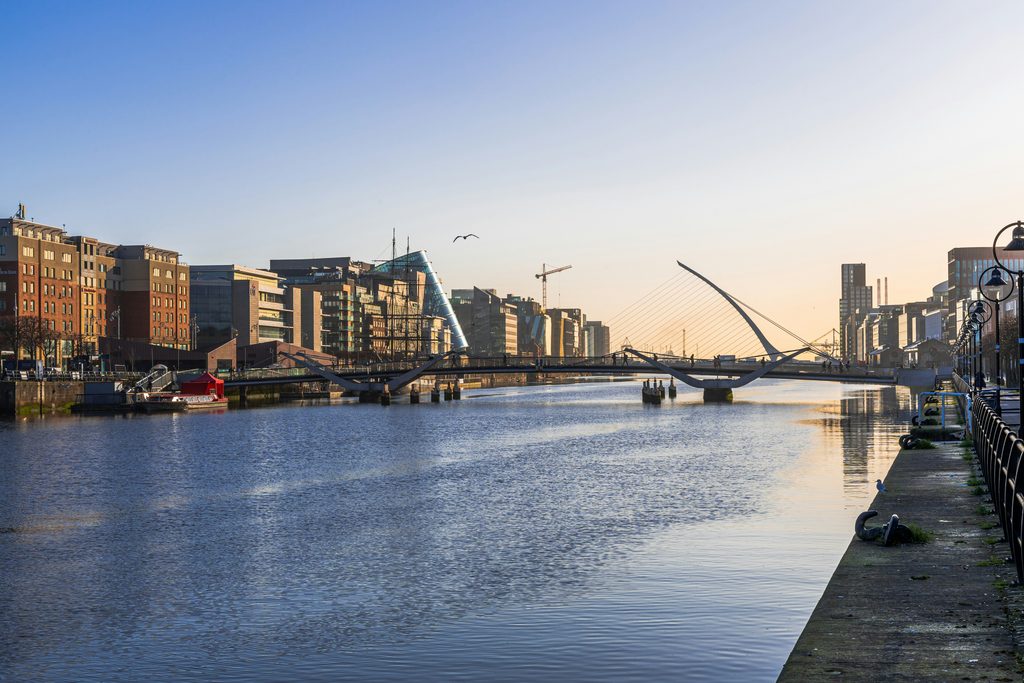
Begin at Trinity College. The Book of Kells lives here, a set of Latin gospels illuminated by monks around 800 AD. The tour then puts you in the Long Room. That library runs about 65 metres and once held roughly 200,000 of the college’s oldest books. It’s the photo everyone takes. Take it anyway.
Then go to Kilmainham Gaol, and book it ahead because it sells out. This is where the British executed the leaders of the 1916 Easter Rising. The executions turned a rebellion many Dubliners had jeered at into a cause the whole country took up. Within six years there was an Irish Free State. Empires rarely get a lesson that quick and then fail to learn it so thoroughly.
The Guinness Storehouse sits at St James’s Gate. In 1759 Arthur Guinness signed a 9,000-year lease on the site for £45 a year. Optimism, or the best property deal in Irish history. Your ticket includes a pint at the Gravity Bar on the top floor, which gives you a 360-degree view of the city.
Instagrammable Pics: the Ha’penny Bridge, a cast-iron footbridge over the Liffey from 1816 that once charged a halfpenny toll. Also the red front of the Temple Bar pub. Photograph it from outside. Drink somewhere else for half the price.
The Rock of Cashel: Where Kings Gave Up
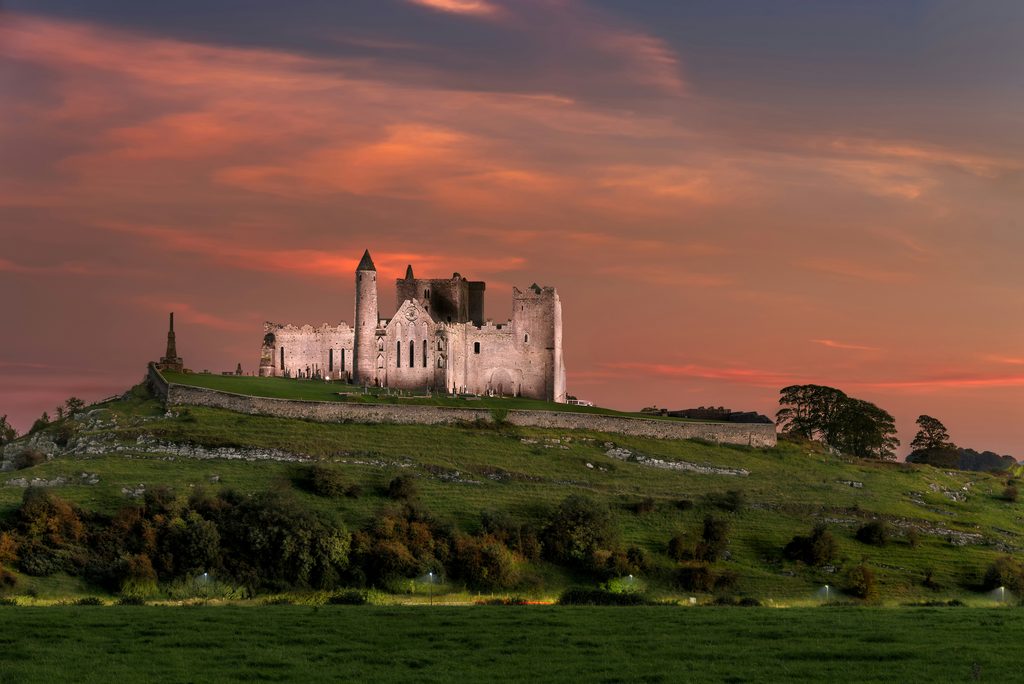
Drive on into County Tipperary and the Rock of Cashel comes up off the plain. It’s a limestone outcrop with a ruined cathedral, a round tower and a chapel stacked on top. For centuries it was the seat of the Kings of Munster. In 1101 the king handed it to the Church, which was both pious and a neat way to keep it out of his rivals’ hands.
Cormac’s Chapel, consecrated in 1134, holds some of the oldest surviving frescoes in Ireland. Local legend says the Devil bit a chunk out of a mountain to the north, broke a tooth, and spat it out here. The mountain is still called the Devil’s Bit. The story is geologically absurd, and nobody is in a rush to correct it.
Blarney Castle: Kiss the Stone, See the Grounds
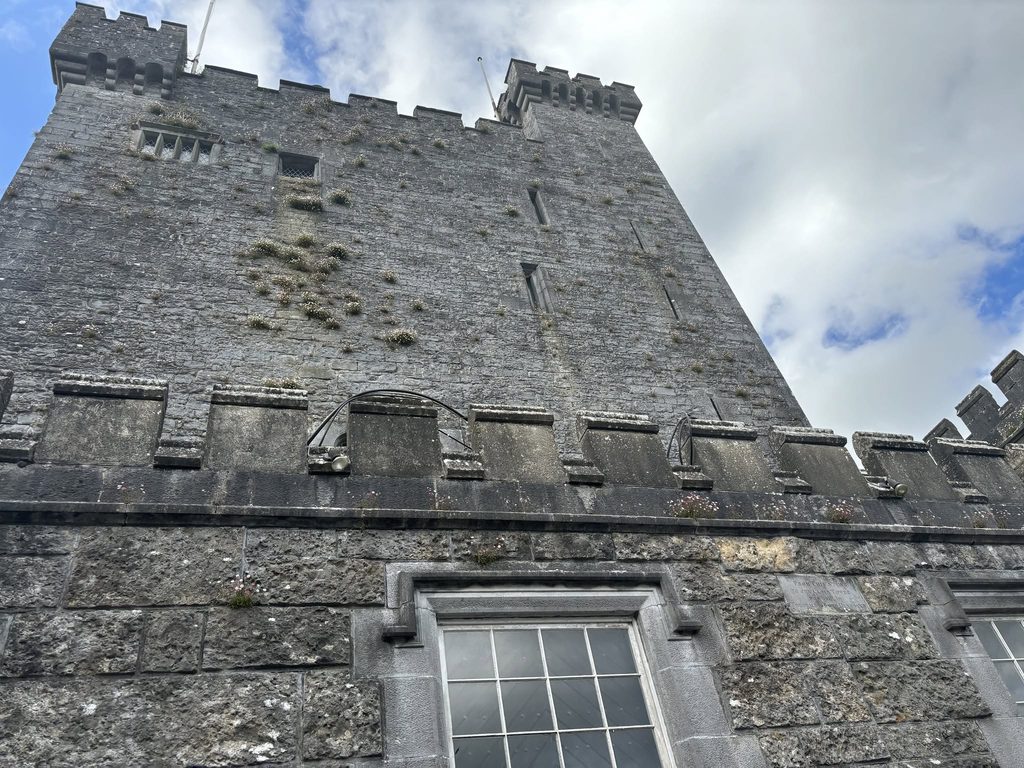
Blarney Castle, just outside Cork city, is the one nearly everyone visits. Dermot McCarthy built the current tower house in the mid-15th century. The word “blarney” is said to come from Elizabeth I. She grew tired of a later McCarthy lord’s charming, endlessly evasive replies to her demands and dismissed them as “Blarney.” English acquired a word. The Queen did not acquire the castle.
The Blarney Stone is set into the battlements at the top. To reach it you climb a narrow, winding stone staircase of over 100 steps, and on a summer afternoon the queue on those stairs can take an hour. Go early. At the top you lie on your back, lean out over a drop and kiss the stone upside down while an attendant keeps hold of you. Legend says it grants the gift of eloquence. Millions have tried. Results vary, though nothing has been confirmed with veracity.
Give the grounds as long as the castle. The Rock Close is a garden of old yews and druid-themed stones. The Poison Garden grows plants like wolfsbane, mandrake and ricin, some caged for good reason. Blarney House, a 19th-century Scottish baronial mansion, opens for tours in summer.
Instagrammable Pics: The castle from across the lawn by the river, framed by trees. Or the upside-down kiss, if someone else holds the phone.
Killarney: Idyllic And Unblighted
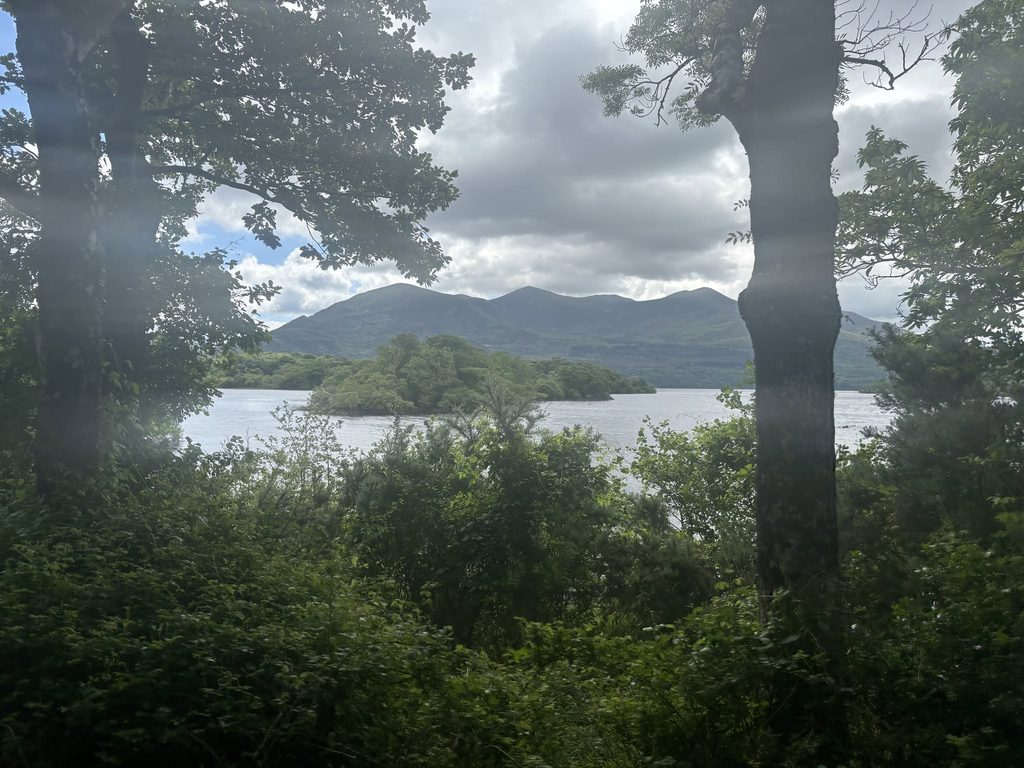
Beyond its architectural landmarks, Killarney is world-renowned for its diverse natural landscape and outdoor adventures. Torc Waterfall, a dramatic 20-meter cascade nestled within ancient oak woodland at the base of Torc Mountain, offers an accessible and picture-perfect stop just off the main N71 road. Higher up the mountain, energetic travelers can ascend the Cardiac Hill steps for sweeping panoramic vistas over Lough Leane and Muckross Lake. For serious hikers, Carrauntoohil, Ireland’s highest mountain peak located in the nearby MacGillycuddy’s Reeks range—presents a rewarding full-day mountaineering challenge.
Water activities provide a unique vantage point on the national park’s ecosystems. Kayaking across the pristine waters of Lough Leane to the limestone caves of Innisfallen Island offers close encounters with Ireland’s only remaining herd of native wild red deer roaming along the quiet shorelines.
Instagrammable Pics: Ladies View, on the road between Killarney and Kenmare. It’s named for Queen Victoria’s ladies-in-waiting, who stopped there in 1861. Upper Lake below, mountains behind.
The Cliffs of Moher: Ireland’s Most-Visited Natural Site
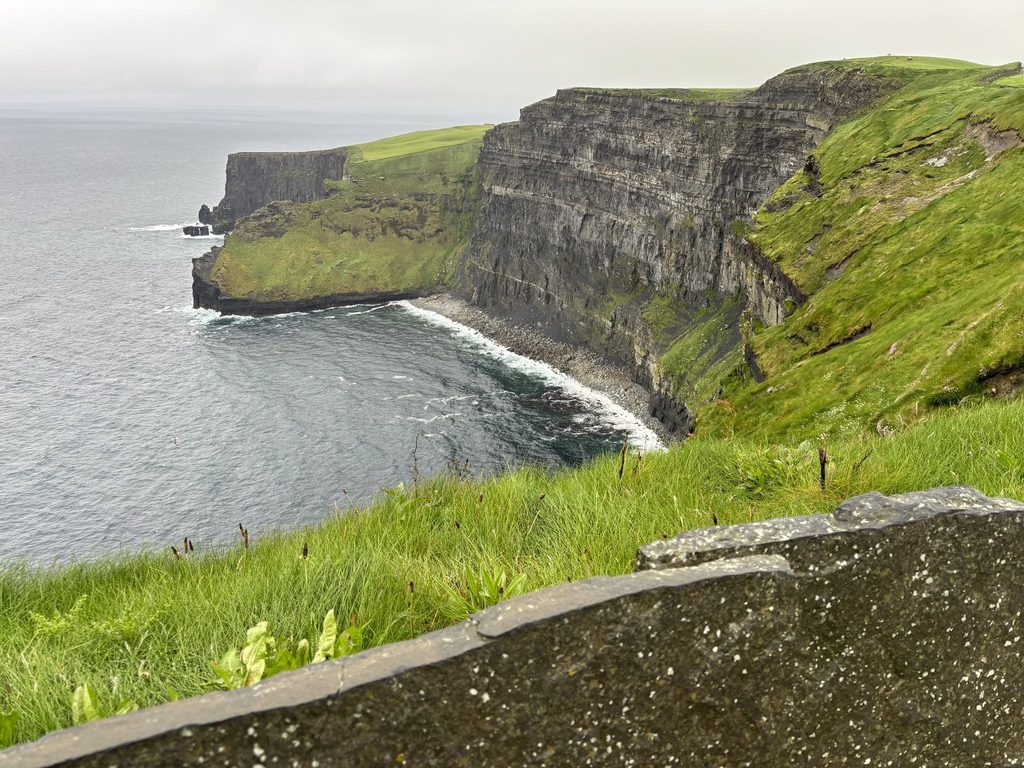
The Cliffs of Moher run about 14 km along the County Clare coast and reach 214 metres at their highest. They’re the most visited natural attraction in Ireland, and they appear in Harry Potter and the Half-Blood Prince. On a clear day you can see the Aran Islands and Galway Bay. Clear days are a matter of luck.
The visitor center is built into the hillside, so it doesn’t spoil the view. Next to it is O’Brien’s Tower, which local landowner Cornelius O’Brien put up in 1835 as a viewing point for the tourists of his day.
The center sits at the busiest point. Walk south along the coastal path toward Hag’s Head and the crowds thin out fast. Stay behind the barriers. The edges are undercut, and the wind will not care about your photo. From spring into summer, puffins nest on the cliffs and on Goat Island, the sea stack below. Bring binoculars.
Instagrammable Pics: The view north from the southern path, with O’Brien’s Tower on the far headland and the cliff line curving away.
Galway: City of Song
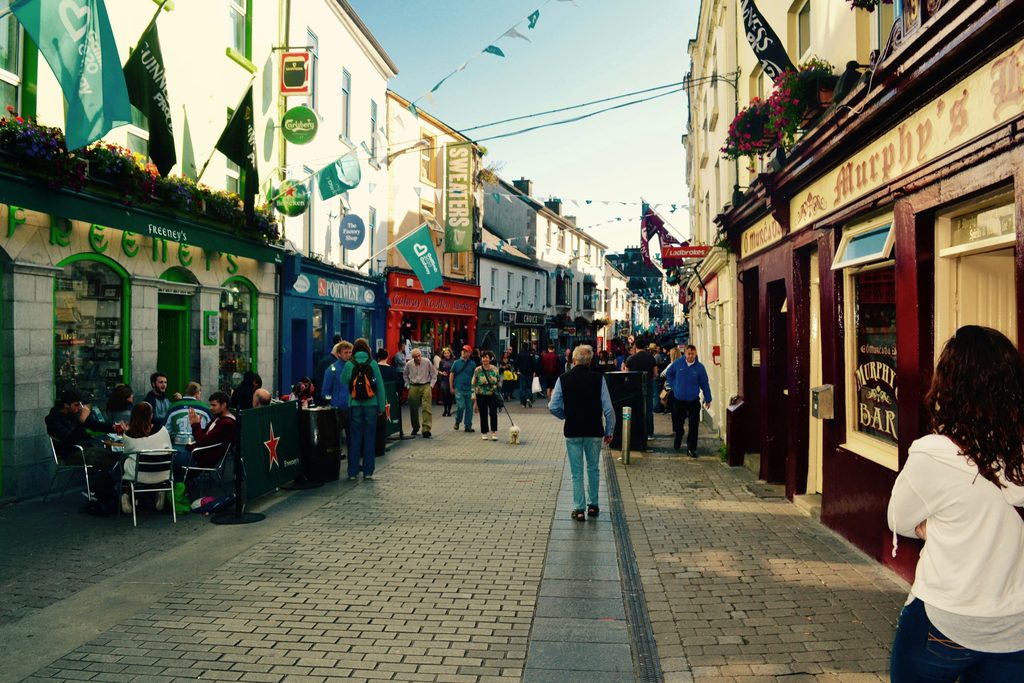
Galway is the Irish city where the music spills out of pubs into the street. Walk from Eyre Square down Shop Street and Quay Street to the Spanish Arch, a fragment of 16th-century city wall. The Claddagh, just across the river, gave its name to the ring with two hands holding a crowned heart. Every jeweller in town sells one. Very few of them make it.
An hour west into Connemara is Kylemore Abbey, on a lake shore under a wooded hill. Mitchell Henry built it as a castle in the 1860s for his wife Margaret, who died a few years later. Benedictine nuns arrived in 1920 and are still there. The restored Victorian walled garden is worth the walk.
Instagrammable Pics: Kylemore from across the lake. It’s the classic angle, and you’ll see why.
The Giant’s Causeway: Northern Ireland’s Treasure
Cross into Northern Ireland and the currency changes to sterling. Check that your car hire covers the border.
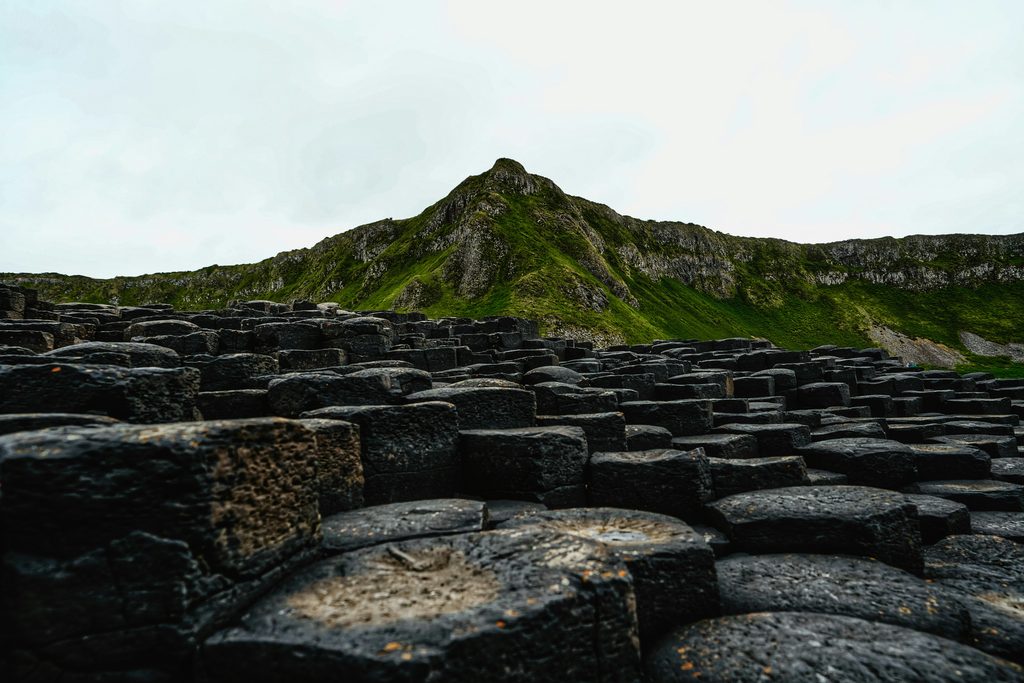
The Giant’s Causeway is about 40,000 interlocking basalt columns, mostly hexagonal, left by volcanic activity around 60 million years ago. It’s Northern Ireland’s only UNESCO World Heritage Site. The more popular account credits the giant Finn McCool, who built it to reach a rival in Scotland. Choose your preferred version. You can walk onto the stones free. The visitor center charges, and parking comes bundled into that price.
Nearby, the Carrick-a-Rede rope bridge crosses a 20-metre gap about 30 meters above the sea. Salmon fishermen first strung it up. The modern version is far sturdier. Your knees will not believe it.
Instagrammable Pics: The Stepping Stones, the iconic cluster where visitors can walk right out onto the geometric polygonal columns.
