

Bryce Canyon National Park is the best national park to visit in winter: snow on orange hoodoos, and the best overlooks sit in the first three miles of road, the stretch plow crews clear first. Yellowstone is second, for wildlife. Death Valley and the Everglades are the warm picks. Yosemite is the most overrated winter pick, especially over the holidays.
Published November 15, 2026.
My own backcountry trips in Olympic, Mount Rainier and North Cascades run on one rule, and I bring it to every winter park: check the road before the scenery. A park can be gorgeous and still be a bad trip if the one road you need is shut. So the list below is ranked on what you can actually reach, drive and do between December and February.
Each entry gives the winter road situation, the entrance fee, what is open, and who should skip it. Our wider best winter vacations in the USA list covers ski towns and cities too. This one stays inside the national park system.
Best National Parks in Winter at a Glance
| Rank | Park | Best for | Entrance fee (vehicle) | Winter catch |
|---|---|---|---|---|
| 1 | Bryce Canyon, UT | Snow on red rock, short outings | $35 | Main road sometimes closes beyond Mile 3 |
| 2 | Yellowstone, WY | Wildlife, steam, quiet | $35 | Most roads closed to cars; one road open year-round |
| 3 | Zion, UT | Red cliffs, easy walks | $35 | Shuttle runs only Dec 26 to Jan 2; icy shady trails |
| 4 | Death Valley, CA | Sun, no coat, empty roads | $30 | Long gaps between services; cards only |
| 5 | Everglades, FL | Birds and gators in the dry season | $35 | Three entrances that do not connect |
| 6 | Grand Canyon South Rim, AZ | First-timers, big views | $35 | Some facilities close; North Rim and Phantom Ranch closed |
| 7 | Yosemite, CA | Valley walks, waterfalls | $35 | Tioga and Glacier Point roads closed; holiday traffic |
The Best National Parks to Visit in Winter, Ranked
1. Bryce Canyon: my winner
Bryce is the easiest park on this list to enjoy in snow. The park’s winter page says a short visit should focus on the amphitheater along the first three miles, and that stretch is plowed first after a storm. At about 8,000 feet the park holds snow well, and fresh powder on orange hoodoos and dark pines is the view people come for. Snowshoeing is allowed on every trail, and you can ski routes above the rim, though skiing off the rim into the canyon is illegal.
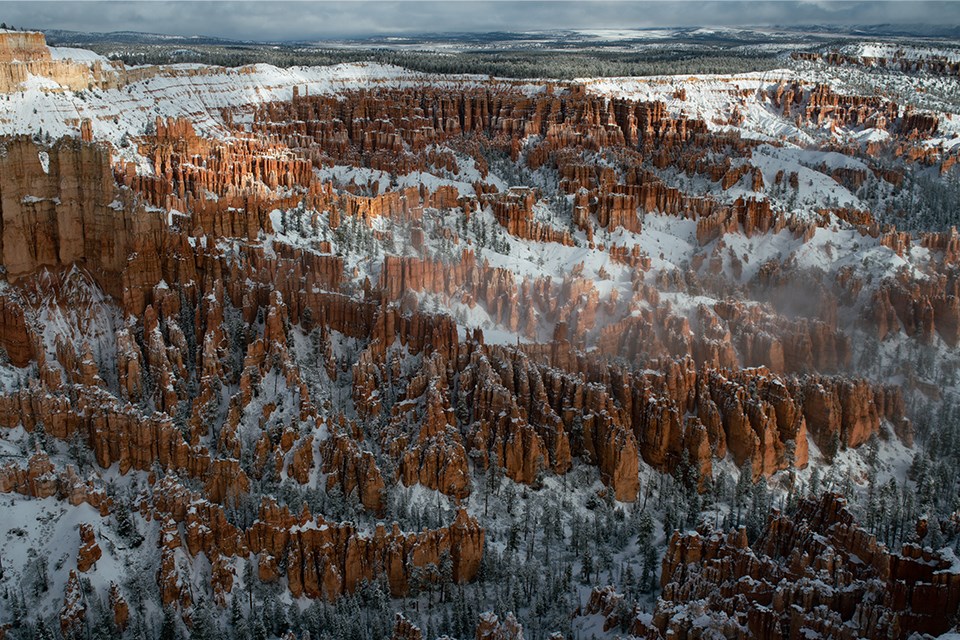
I’ve done the Utah parks as a road-trip loop, and in winter Bryce is the stop I’d protect if the schedule got tight. Entry is $35 per private vehicle. After a storm the 18-mile main road can close beyond Mile 3 for a day or more while plows work the southern drive. Bryce, Inspiration, Sunset and Sunrise points all sit inside that open stretch, which is why a short winter visit works here when it fails elsewhere.
Best for: a one-night stop on a Utah loop, and anyone who wants snow without a long drive in it. Skip it if you need a full day of varied scenery; once the road shuts at Mile 3, the south end is out.
2. Yellowstone: the one for wildlife
Yellowstone in winter is like a wildlife film with the sound turned down. Geyser basins send steam up into freezing air, and bison show up dark against the snow. I photograph wildlife for fun, and a white background makes animals far easier to pick out. For wildlife it beats everything else here. It sits second because it is the hardest to reach.
The park’s road page says the only road generally open to regular vehicles year-round runs from the North Entrance at Gardiner to Cooke City. Most other roads close to cars from early November to late April. Commercially guided snowmobiles and snowcoaches run from mid-December to mid-March, and this season’s oversnow dates are December 15, 2026 to March 7–15, 2027, depending on the segment. A seven-day vehicle pass is $35.
Best for: anyone who will trade their own car for a guided snowcoach day and a real shot at bison and elk. Skip it if driving yourself to Old Faithful is the plan; in winter that road is for snowcoaches and snowmobiles only. If you are planning lodging, our Yellowstone where-to-stay guide has the non-winter picture.
3. Zion: red cliffs and easy winter walks
Zion in winter trades shuttle lines for quiet, and a dusting on the red cliffs makes the canyon look freshly painted. Daytime highs typically run 30 to 60°F, per the park’s conditions page, and the park is open every day, around the clock.
Winter is also the one time you can drive your own car up Zion Canyon Scenic Drive. The shuttle schedule shows no service from November 29 to December 25, then shuttles again for the holidays from December 26 to January 2. Outside shuttle weeks, usually December through February, private cars can use the canyon road, though the park may close it for a while if parking fills. Go early.
Entry is $35 per vehicle. Shady paths ice up, so pack traction for your boots. Best for: day hikers and photographers who want the canyon road without a shuttle. Skip it if you had your heart set on Hidden Canyon; a rockfall has closed it and cut off Observation Point from the canyon floor. More lodging and trail detail sits in our Zion camping, hotels and hiking guide.
4. Death Valley: winter without the coat
Death Valley is the coat-optional park. The park’s weather page calls low-elevation winter days mild, with nights that only occasionally reach freezing, and sunny skies are the norm. It cools 3 to 5°F for every thousand feet you climb, so the overlooks run colder than the valley floor. Dust storms can blow up ahead of a cold front, and winter storms sometimes bring clouds and rain.
Entry is $30 per private vehicle, good for seven days with re-entry, and only cards are accepted. It is also the only park on this list with no extra fee for visitors from abroad. I’d use it as the warm leg of a longer Southwest loop. Best for: road-trippers who like open space and long, empty drives. Skip it if you came for snow; the valley floor is the wrong place to look.
5. Everglades: the dry season is the season
The Everglades flips the calendar. The park’s weather page puts the dry season at about December to mid-May, with temperatures from the low 50s to upper 70s °F and low humidity, and only about a quarter of the year’s rain. It is open daily, including holidays.
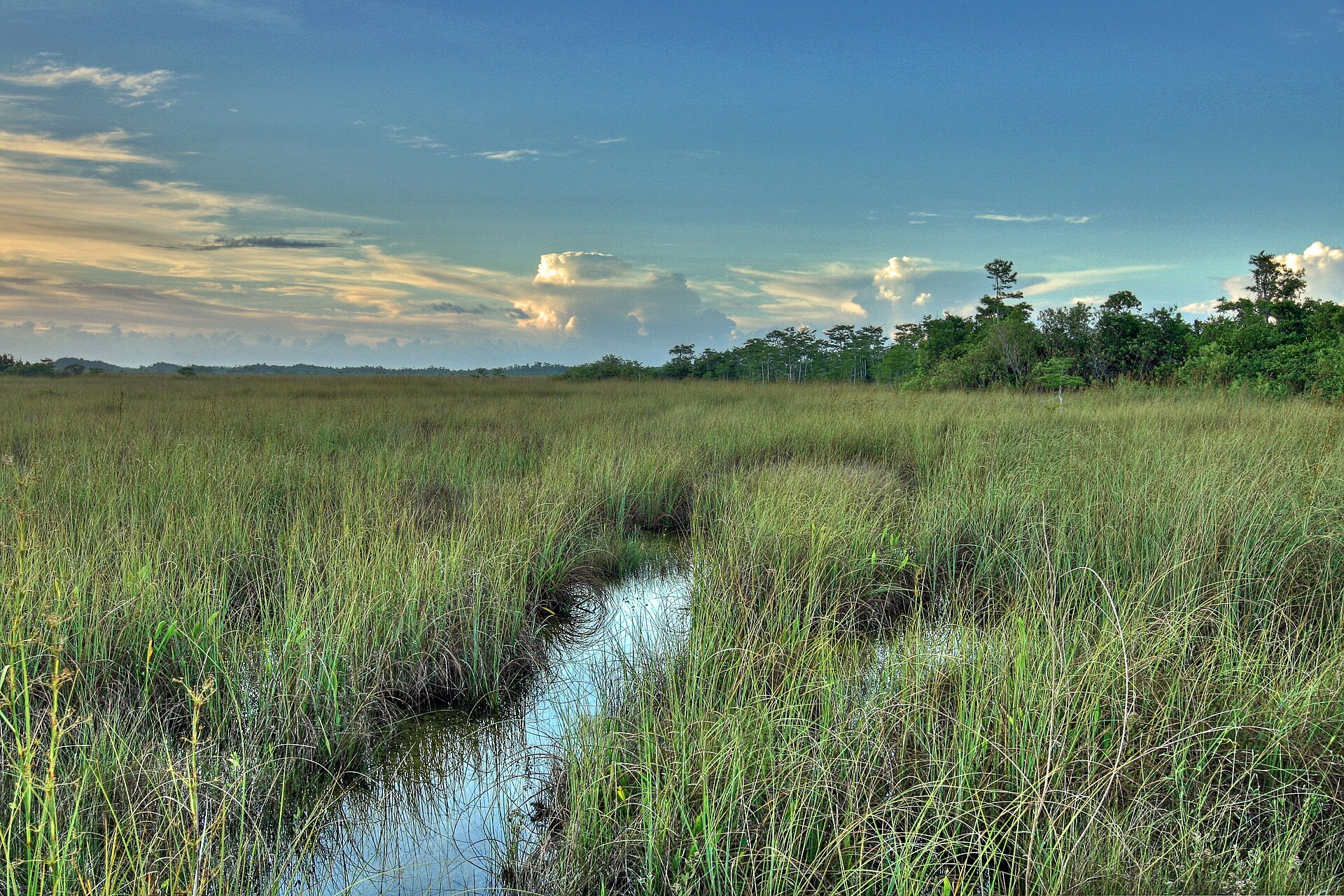
Entry is $35 per vehicle for seven days at all entrances. The three entrances, Homestead, Shark Valley and Gulf Coast, do not interconnect, so pick one per day. Shark Valley is open to vehicles from 8:30 a.m. to 6 p.m., according to the hours page. Continental cold fronts do bring wind and near-freezing nights now and then. Best for: bird and wildlife watchers. Skip it if you want big views; the land is flat, and the show is up close.
6. Grand Canyon South Rim: great views, some closures
The South Rim is open 24 hours a day all year, and the park’s hours page says most services run year-round while some facilities close in winter. A coat of snow along the rim picks out every ledge and layer, and the low sun keeps the canyon in softer light than summer.
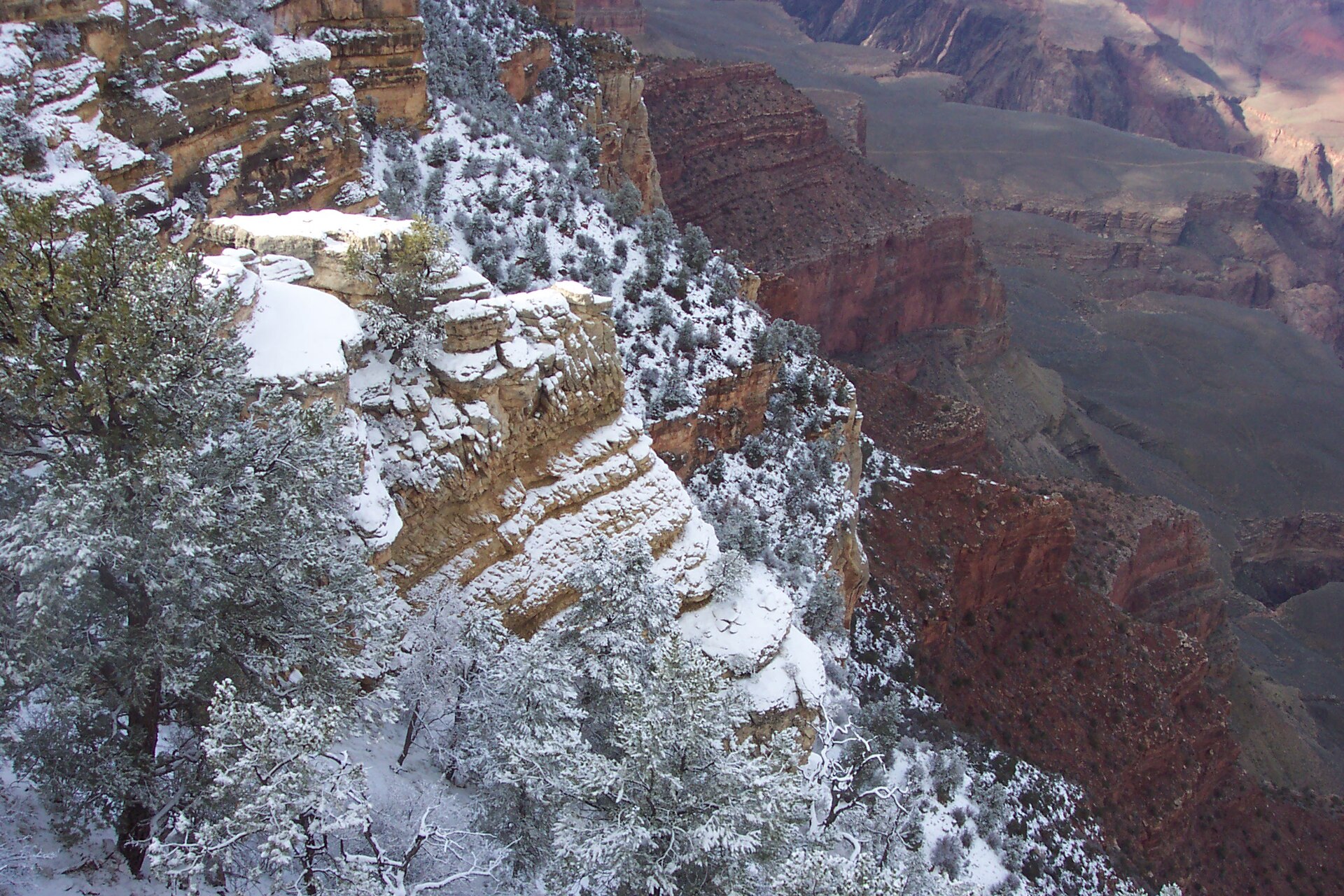
Entry is $35 per vehicle, and the park does not accept cash. The North Rim is open only through November 30, 2026, or until the first major snowstorm, with no campground, store or gas, so it is not a winter stop. Phantom Ranch at the canyon bottom and the North Kaibab Trail are also closed, with no reopening date. Best for: first-timers who want the big view and an easy walk along the rim. Skip it if your plan was a rim-to-river hike; with ice up top and Phantom Ranch shut, this is a rim trip this winter.
7. Yosemite: the most overrated winter pick
Yosemite in winter has real charm. Some waterfalls nearly always run a little, and the valley is lovely under light snow. The trouble is what the park itself warns about: the winter page says Tioga Road closes, usually in November, and the Glacier Point road closes too. Chains are often required, and the holidays bring traffic jams and limited parking, especially in late December and early January.
Entry is $35 per vehicle. Yosemite Valley and Wawona stay open by car all year, and from mid-December to early April the Glacier Point/Badger Pass road is plowed to the ski area. Water levels tend to be low until snow and rain fall. Best for: a January midweek stay in the valley. Skip it if your only dates are the week of Christmas. Our Yosemite travel guide covers the rest of the year.
Winter Park Road Check and Pass Math
Run this list before every winter park trip. It takes ten minutes.
- Open the park’s alerts and road status page the night before and again at breakfast.
- Find the one road you need (Yellowstone’s North Entrance, Bryce’s first three miles, Yosemite’s valley road) and note where it ends.
- Carry tire chains if the park lists them as required, and know how to put them on.
- Pack foot traction for icy trails, a warm layer, water, food and a full tank.
- Check cell coverage and the nearest fuel; Death Valley has long gaps between services.
- Pick a backup stop within an hour of your plan, in case the gate is shut.
Now the money. The America the Beautiful annual pass costs $80 for US citizens and residents and covers entrance fees at national parks and other federal recreation sites. With $35 vehicle fees at Bryce, Yellowstone, Zion and the Grand Canyon, two parks cost $70 and the pass loses. Three parks cost $105 and the pass wins by $25. Death Valley at $30 changes little: Bryce, Zion and Death Valley together come to $100 against $80.
Visiting from outside the US? Six of these seven parks, every one except Death Valley, charge an extra $100 per person aged 16 and over on top of the entrance fee, unless you hold an annual pass. The $250 nonresident annual pass covers the entrance fee and those extra fees for the holder and passengers in a private car, so it wins by the second park, even for one adult.
Frequently asked questions about the best national parks in winter
Which national park is best in winter for snow?
I’d pick Bryce Canyon for a short trip and Yellowstone for a longer one. Bryce gives you snow on red rock close to the road. Yellowstone gives you wildlife and steam, but you need a snowcoach or snowmobile for most of it.
Which national parks are warm in winter?
Death Valley and the Everglades. Death Valley has mild low-elevation days, and the Everglades dry season runs about December to mid-May. Plan fuel and water in the desert.
Are national parks open in winter?
Most are, but roads and services change. Yellowstone closes most roads to cars from early November, and Yosemite closes Tioga Road, usually in November. The South Rim of the Grand Canyon and Zion are open every day, and Zion’s canyon road opens to private cars when the shuttle is not running. Check the park’s road page before you leave.
Do I need chains or traction for a winter park trip?
At Yosemite, chains are often required on park roads, and you must carry them when they are. For walking, I’d bring traction for your shoes at Bryce, Zion and the Grand Canyon, where shaded paths ice up.
