
The TSA rules for carry on bags turn on one measurement: 3.4 ounces, the size of the container. Every liquid, gel and aerosol you carry on has to sit in a bottle that size or smaller. All of those bottles have to fit in one quart-size bag. Miss it and the bottle goes in the bin or the bag gets checked, which on Delta is $90 for the round trip. Most of what follows is either an exception to that rule or a smaller habit around it.
The limit is on the bottle
The TSA’s 3-1-1 rule allows each passenger one quart-size bag of liquids, gels and aerosols. Every container in it holds 3.4 ounces (100 milliliters) or less. Toothpaste, shampoo, mouthwash and lotion all count, and the bag has to close. So does anything you can spread, pour or pump. A sandwich or a bag of nuts is fine in a carry-on, but peanut butter is allowed only at 3.4 ounces or less.
The size that counts is the container’s. A half-empty full-size bottle doesn’t get a pass, however little is left inside.
Buy empty travel bottles once and refill them. I keep one clear quart bag packed between trips and leave it in the suitcase, so there’s nothing to rebuild the night before. Where I slip is the refilling. The bag is always ready, and I still find out at a hotel sink that the toothpaste was nearly flat.
A full-size bottle costs $90 to bring
Anything in a container over 3.4 ounces has to go in the checked bag, so the real price of full-size shampoo is the bag fee. Delta’s first checked bag is $45 each way on a Delta Main fare. That’s $90 for the round trip on one bag. Two travelers who check a bag each pay $180 to carry toiletries, and the same money would cover a set of empty bottles many times over.
Other airlines set their own fees, but decanting still wins on price. I’d give the bag fee its own line in the vacation budget, because a fee you pay at the counter is easy to forget you paid.
When a bigger bottle is allowed
Medicine, baby formula and breast milk are the big exceptions. Medically necessary liquids, formula and breast milk can go over 3.4 ounces in reasonable amounts. Pack them apart from the quart bag and tell the officer at the start of screening.
Duty-free is the other exception, and it’s narrower. Duty-free liquids over 3.4 ounces can ride in your carry-on when you fly into the US and connect to another flight. The conditions are strict, though: you bought them abroad, the store sealed them in a clear tamper-evident bag, and you have the original receipt from within 48 hours. Leave the bag sealed until you’re home, and keep the receipt in the top pocket where you can reach it. Break the seal before the checkpoint and the bottles are just full-size liquids again, which means the checked bag.
Power banks have to stay with you
Batteries run the opposite way to liquids. Portable chargers and power banks with a lithium ion battery must go in carry-on bags, never checked ones. So the bag you check for the sake of your shampoo can’t take your charger. Keep yours in the personal item, in the same pouch as the cables, so everything electronic is in one spot at the checkpoint.
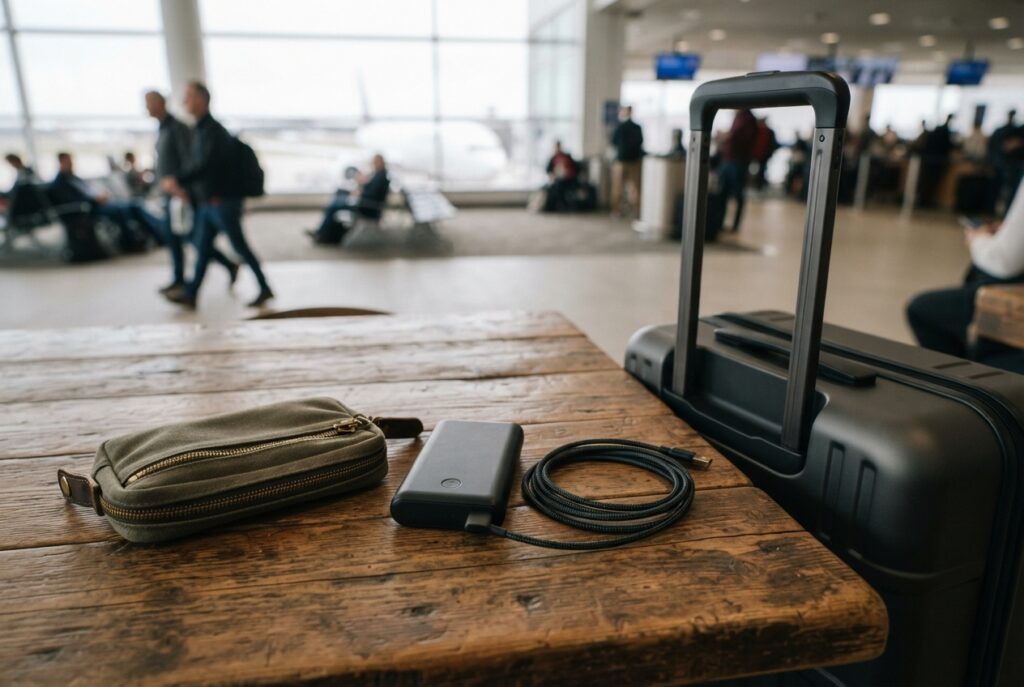
You’ll want that spot easy to reach, because TSA still wants laptops out of the bag and in a separate bin. Food works the same way. All of it goes through the X-ray, and officers can ask you to pull it out. Pack it on top, where your hand lands first.
Shoes are the rule that eased. Homeland Security ended the shoes-off rule at airports nationwide in July 2025, though an officer can still ask for them if you’re pulled for extra screening. I still wear slip-ons on a travel day and skip the lace-up boots, mostly out of habit by now.
PreCheck takes most of the unpacking away. Enrollment is about $78 to $85 depending on the provider, and members can leave laptops, 3-1-1 liquids, belts and light jackets where they are. About 99 percent of PreCheck passengers wait less than 10 minutes, by TSA’s figure. Two enrollments come to about $156 to $170. That’s less than the $180 that couple would pay to check a bag each on a single round trip. If you fly once a year, skip it. If you fly several times, it’s the better buy.
If the officer says no, ask once
The officer at the checkpoint makes the final call, and TSA’s item list says as much. You’ll lose the argument at the belt, and it holds up the line behind you while you do.
Ask early what your options are. “Is there a way to check this, or should it go in the bin?” is a fair question. If it’s a full-size bottle, the realistic answer is the bin, and a travel-size replacement costs less than a missed boarding call.
Better still, settle it before the airport. Search the item on TSA’s online list of allowed items, which takes thirty seconds. I look things up there even when I’m fairly sure, because fairly sure is how a full-size bottle ends up in the bin.
Bag size is the airline’s rule, and the wrong ID costs $45
Bag size and weight limits come from your airline. So a bag can pass the checkpoint and still fail at the gate, a poor surprise in the middle of holiday travel.
The ID rule changed in 2026. Since February 1, travelers without a REAL ID or another accepted ID, such as a passport, pay $45 for TSA Confirm.ID to get through the checkpoint. That fee covers a 10-day travel period, so a week-long trip costs $45 total.
Check your license for the star tonight. If it’s there, you’re done.