

New Year’s celebrations around the world range from jumping seven waves in Brazil, burning an old man in India and smashing plates in Denmark to hanging onions in Greece, potato draws in Colombia, tamales in Mexico, bread banging in Ireland and Big Ben’s midnight in London.
New Year’s Holiday, unlike most holiday celebrations, is something people universally celebrate. Everyone, the world over, is eager to reflect on the passage of a decaying year while simultaneously greeting the possibilities redolent in a new one. In America, our most cherished celebration of the New Year lies on the exuberant streets of Times Square, where a sanctimonious ball is slowly dropped as the seconds stretch toward christening of a new year. Different cultures, different societies, however, celebrate the holiday in multifarious ways.
Two of the eight can be built into a trip for Thursday, December 31, 2026: the free beach party in Rio and the ticketed fireworks in London. The other six are customs you can watch, join or copy at home. Rio is the one worth flying for. London is the one to skip unless a ticket is already in your inbox, because the official page says you cannot attend the fireworks without one.
Jumping Waves – Brazil

In the southern hemisphere, the New Year is doused in the sweltering sunlight of summer. In contrast to the United States, the oncoming of the holidays does not forebear the frigid environs of winter in Brazil. Instead, it champions the arrival of summer. Throughout Brazil, people head to the ocean at midnight and jump seven waves, making a wish with each one. The custom comes from the Umbanda faith and honors Iemanjá, the goddess of the sea, and many people toss flowers into the water for her. Before entering the sea, celebrators are supposed to wear white, a symbol of peace, though it is a custom and not a rule.
The biggest version is Réveillon on Copacabana, and the scale is hard to picture until you see the numbers. For the last New Year, the city’s tourism body counted more than 5.1 million people across Rio, about 2.6 million of them at Copacabana, for fireworks that ran about 12 minutes. The city’s program of shows is free, so nobody needs a ticket to stand on the sand.
The 2026/27 program, stage map and transport rules were not yet on the official pages read today. Last year Riotur announced its program on December 16, 2025: 19 barges along the Copacabana waterfront, 13 stages across the city and more than 70 acts, with the main stage in front of the Copacabana Palace hotel. Treat those as last year’s numbers and check again in mid-December.
Best for: a first New Year trip abroad where nothing has to be reserved to stand on the sand; pack white and arrive early. Skip it if: a crowd in the millions would ruin the night for you, or you need a seat and a fixed exit.
Looking Forward – India

In India, the somewhat macabre tradition of burning an effigy of an old man ensues. The best-known version is in Fort Kochi, Kerala, where a giant model of an elderly man in a suit and beard is burned on the beach at midnight on December 31, with music and fireworks, as the Cochin Carnival closes the year. The effigy, in symbolic terms, is reflective of the temporal grievances of the prior year and the clearing of a new space for a new year to commence. The figure is called Pappanji. In a coat, hat and cigar, he looks like an old European gentleman, which many link to Fort Kochi’s Portuguese past. Though India is a depository of numerous faiths and cultures, this tradition has nonetheless remained resilient in an otherwise cosmopolitan society.
Kerala Tourism gives the Carnival as the last two weeks of December but says festival dates follow the Malayalam calendar and should be confirmed with local authorities. The burning site has also been debated since a 2023 crush injured several people, so the exact ground can change.
Best for: travelers who like a fire, music and a beach crowd without a stadium-sized scale. Skip it if: you need a guaranteed venue or time; nothing for 2026/27 is posted yet.
Tossing Old Plates – Denmark

Many international traditions ring of catharsis. The Danish, like Thor throwing his hammer, have an old custom of smashing plates and dishes at the doors of friends and family to celebrate a new beginning during New Year’s. As an aside, I’d like to personally enter the headspace of a person vigorously throwing their dirty dishes at their neighbor, as I’d imagine it would sound similar to this: “You’ve been a right prick this year, I’m venting, but here’s to a new beginning! Happy New Year!”
Additionally, the gathered detritus of broken dishes is said to represent luck: in the old telling, a bigger heap outside your door means more friends and a luckier year. Midnight has gentler customs too. Danes jump off a chair or sofa at the stroke of twelve, eat kransekage, the towering marzipan ring cake, and start the night at 6 pm with the King’s New Year speech on TV.
Best for: anyone who wants a New Year ritual to copy at home with a ring cake and a chair. Skip it if: you would be the one sweeping up; the chair jump gives the same fresh start without the china.
Homemade Tamales – Mexico

In Mexico, families gather to concoct tamales, or corn dough stuffed with meat and cheese all wrapped in husks. It’s a time-consuming endeavor, but it serves as an expression of gratitude to loved ones. Tamales and pozole turn up on the New Year’s Eve table, and in La Huasteca the zacahuil is a single tamal of roughly 45 pounds, cooked underground or in an adobe oven for more than 12 hours. At midnight people eat twelve grapes, one for each chime and each month of the coming year. Some also walk around the block with a suitcase, hoping for a year of travel.
Best for: food travelers who would rather share a table than watch a countdown. Skip it if: you want a public event with a schedule; this one happens in family kitchens.
Ode to Onions – Greece

The genesis of Western civilization lies in the triumvirate of Jerusalem, Athens and Rome. We should thus heed their ritual proclivities. The onion in question is the kremmida, and Greek families hang one outside their door on New Year’s Eve. The next morning a parent wakes the children by gently tapping them on the head with it. Many homes use a sea squill, a wild bulb that looks like an oversized onion and keeps blooming even after it is pulled from the ground, which is why it stands for strength, abundance and wellbeing in the year ahead.
On New Year’s Day the house breaks a pomegranate on the doorstep and cuts the vasilopita, St. Basil’s cake, with a lucky coin baked inside. Whoever finds the coin is promised good luck for the year.
Best for: home cooks and slow-travel types who like a symbol with a cake attached. Skip it if: you need a spectacle; the whole thing is a doorstep, a pomegranate and a slice of cake.
Bashing Bread – Ireland

On New Years, families in Ireland engage in the activity of banging loaves of Christmas bread against the walls and doors of their home. It is all about chasing bad luck out of the house and inviting good spirits in. That, after all, will certainly extinguish the routine sounds of aches and lulls in an old home. The same list adds a midnight habit: go in by the front door and out by the back for luck. If you are building a trip around Ireland rather than the bread, the Ireland guide covers the island.
Best for: a cheap, fun custom to try with leftover Christmas loaves. Skip it if: you have a freshly painted wall.
Tres Potatoes – Colombia

In Colombia, households uphold a tradition on New Year’s called “aguero.” A trio of potatoes are placed under the bed on New Year’s Eve, one peeled, one unpeeled, and the last only partially peeled. After the New Year arrives, each family member picks one without looking. The unpeeled potato signals prosperity, the half-peeled one a so-so year and the fully peeled one a year of financial struggle. The custom is most common in rural areas, especially the potato-growing interior.
Other Colombian customs are easier to spot from the street. Life-size dolls called año viejos are burned after midnight, mostly in neighborhoods, small towns and rural areas rather than tourist districts, and people eat twelve grapes right at midnight.
Best for: travelers who like small household rituals and a bonfire doll on a neighborhood street. Skip it if: you want a city-wide event with a program; the big shows are elsewhere on this list.
Big Ben Strikes Midnight – England
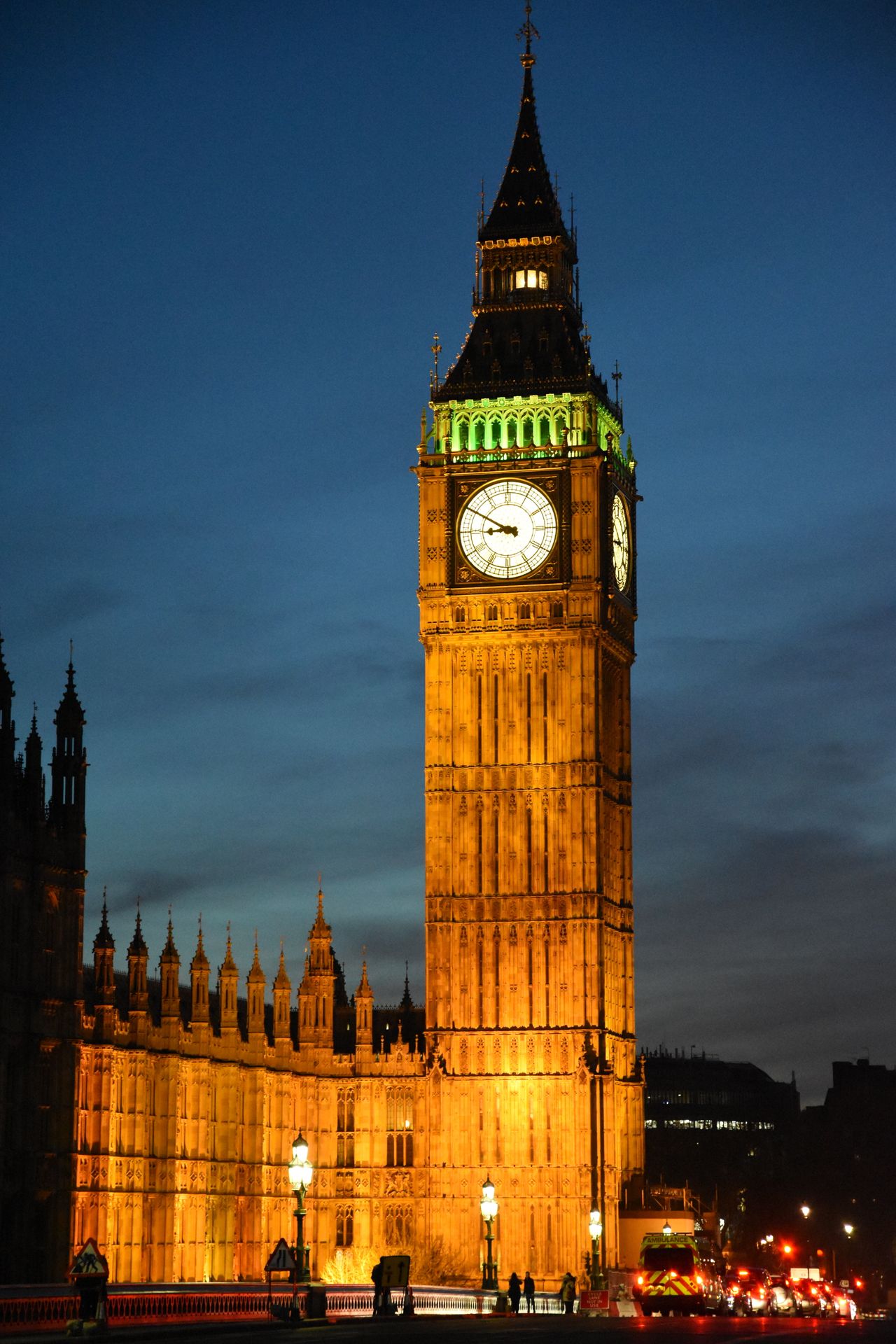
In England, clocks symbolize transition. Hence, it is no surprise that the epicenter of the UK’s celebration of New Year’s coalesces around Big Ben, the Great Bell of the Great Clock of Westminster, which hangs in the Elizabeth Tower at the Palace of Westminster. When it strikes midnight, the fireworks begin as the last chime fades and usually last about 12 to 15 minutes. Crowds sing “Auld Lang Syne,” the Scots poem Robert Burns wrote in 1788; the title means roughly “old times gone by.” In Scotland the circle crosses arms only for the last verse; elsewhere, hands are often crossed from the start. The first verse and chorus read:
Should auld acquaintance be forgot,
And never brought to mind?
Should auld acquaintance be forgot,
And auld lang syne?
For auld lang syne, my dear,
For auld lang syne,
We’ll tak a cup o’ kindness yet,
For auld lang syne.
London New Year’s Eve 2026: what is confirmed
The Greater London Authority lists the show for Thursday, December 31, 2026, 8 pm to 12:30 am. It is ticketed, up to four tickets per buyer, with tickets from £20 to £55 including VAT plus a small booking fee. Category A areas (Blue, Pink, White) are £55, or £35 with a London postcode; Category B areas (Red, Green, Orange) are £40, or £20 with a London postcode. Entry is 8 pm to 10:30 pm. The second batch goes on sale at noon on Friday, November 20, through the official ticket seller, which also runs the only face-value resale route. Refunds are not available.
Getting there needs a plan. Vehicle access is restricted from 2 pm until about 6 am, Westminster and Lambeth bridges and the Golden Jubilee footbridge are among the crossings closed to the public, and five of the six viewing areas may mean walking up to 2 km to public transport. The performers, the program and the fireworks length have not been announced on that page.
Best for: a first-timer who wants the full Thames-side view and will book the same week tickets go on sale. Skip it if: you hate fixed gates and long walks, or you want to decide on the day.
What to book first for New Year 2027
Fixed dates and limited tickets go first; free events last. Use this order:
- London tickets: the second batch opens at noon on November 20, and you cannot attend without one.
- Flights and a bed near the event: the Christmas flight timing guide shows how the booking window works for the holiday weeks.
- Rio plans: watch Riotur in mid-December for the stage map and transport rules.
- Fort Kochi: confirm the Cochin Carnival date and beach with local authorities.
- Home customs (Denmark, Mexico, Greece, Ireland, Colombia): nothing to book. Buy the grapes, onion, potatoes or loaf the week before.
Frequently asked questions about New Year’s celebrations
Which New Year’s celebration is the biggest?
Rio’s Copacabana Réveillon. Last New Year the city counted about 2.6 million people at Copacabana alone and more than 5.1 million across all its stages. London’s show is much smaller because it is ticketed by area.
Do I need a ticket for London’s New Year’s Eve fireworks?
Yes. The Greater London Authority says you cannot attend the fireworks without a ticket. Prices run £20 to £55 plus a booking fee, and the second batch goes on sale at noon on November 20.
What should I wear on Copacabana at New Year?
White is the near-universal color, a symbol of peace and luck, but it is a custom, not a requirement. Some people also bring flowers to toss into the sea for Iemanjá after jumping their seven waves.
Are the 2026/27 details for Rio and Fort Kochi confirmed?
Not yet on the official pages read today. Last year Rio announced its program on December 16, and Kerala Tourism says Cochin Carnival dates follow the Malayalam calendar and should be checked locally. London’s date, times and prices are confirmed.
Which customs can I try at home?
Hanging an onion on the door, jumping off a chair at midnight, eating twelve grapes and walking the block with a suitcase need no event or ticket. Skip the plate-smashing unless the neighbors agree.
Featured photo: Leandro Neumann Ciuffo, CC BY 2.0.
