

Christmas doesn’t arrive the same way everywhere. In one place it tiptoes in on candlelight and quiet hymns; in another it bursts through the door with drums, fireworks, and streets that feel like a moving festival. The date may be familiar, the symbols instantly recognizable—but the way people welcome the season can be wildly different, shaped by climate, history, faith, family rhythms, and the simple question of what a community needs most at the end of the year: comfort, hope, laughter, or light.
That matters to you, even if you’ve celebrated the same way your whole life. In a year when the world can feel both tightly connected and strangely distant, exploring how others mark Christmas can shift your perspective in the best way: it reminds you that there isn’t one “right” version of joy. You might recognize your own family’s habits in someone else’s feast, discover a tradition that explains a phrase you’ve heard all your life, or find a new ritual worth borrowing—one that fits your home, your values, your season.
In this article, we’ll explore how cultures outside of America celebrate Christmas, varying festivities that still commemorate the holiday.
I. Europe
United Kingdom – Christmas Traditions
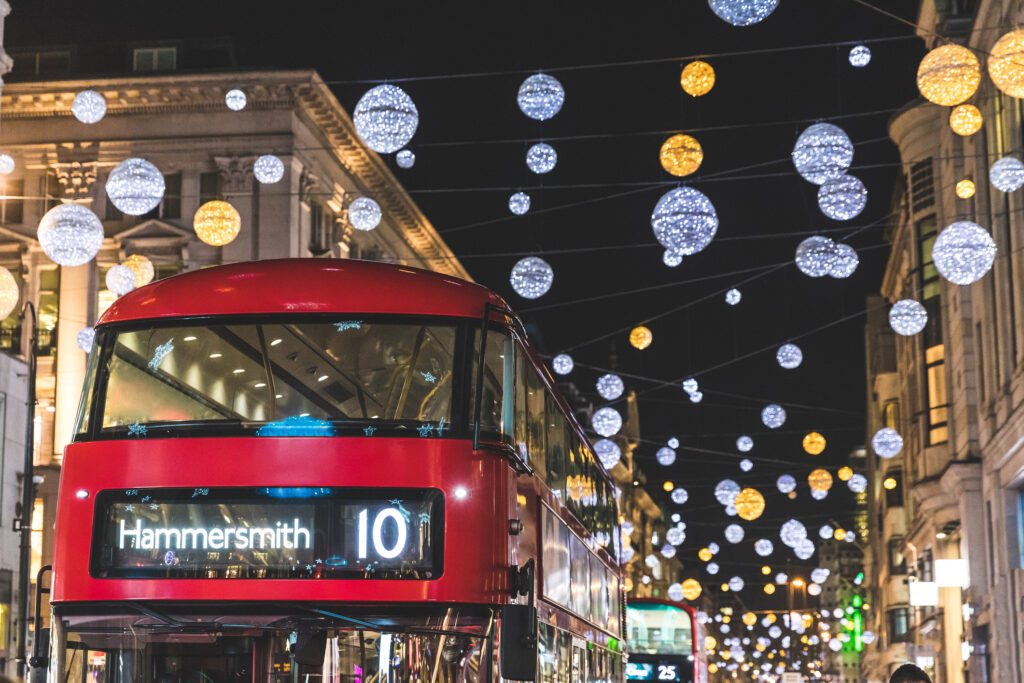
Traditions: In the United Kingdom, Christmas is a blend of ancient and Victorian-era customs. The celebration is centered on Christmas Day and is immediately followed by the national holiday of Boxing Day (December 26th). Traditional UK festivities include a festive dinner of roast turkey with ‘all the trimmings’ like pigs in blankets and stuffing, followed by lighting the Christmas Pudding, a rich, fruit-filled dessert often set alight with warm brandy. The Christmas cracker, a cardboard tube twisted at both ends and containing a paper hat, small gift, and joke, is a uniquely British staple pulled apart by two people at the dinner table. Children hang stockings or pillowcases for Father Christmas to fill, and many look forward to watching the Royal Christmas Message broadcast on Christmas Day afternoon.
Germany
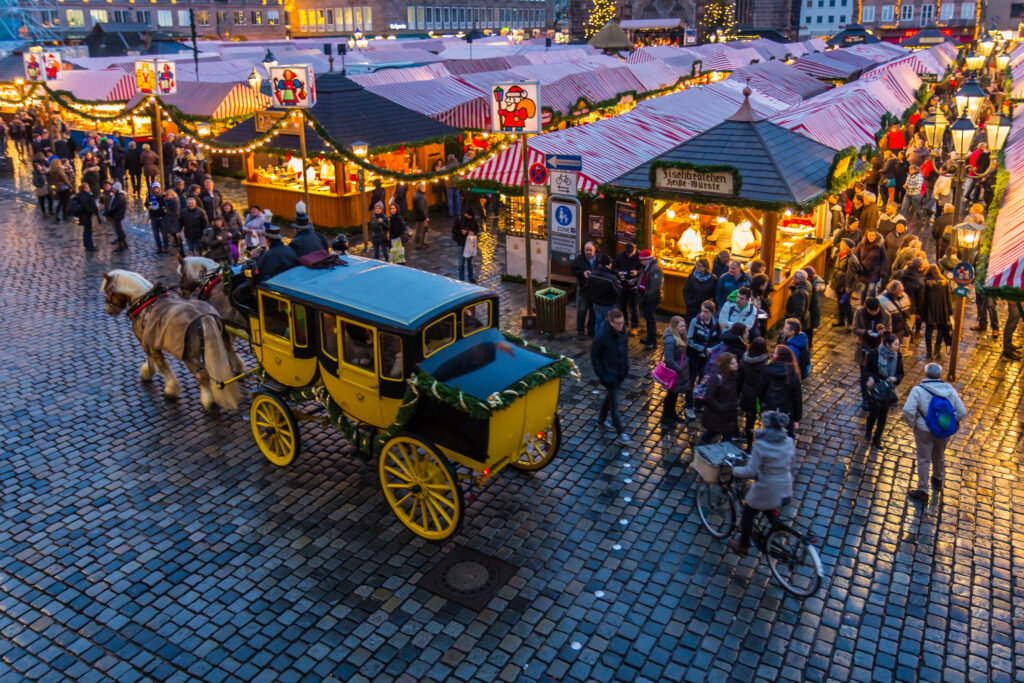
German Christmas traditions focus heavily on the anticipation and preparation leading up to Christmas Eve (Heiligabend), which is the primary day for celebration and gift-giving. The festive season begins with the four weeks of Advent, marked by the Advent Wreath (Adventskranz)—a wreath with four candles, one lit on each Sunday—and the popular Advent Calendar (Adventskalender), which originated in Germany to help children count down the days.
Before Christmas, on December 6th, children place polished boots outside their doors for St. Nicholas to fill with small treats if they have been good. Germany is also world-famous for its enchanting Christmas Markets (Weihnachtsmärkte) that open in late November, offering handcrafted gifts and traditional foods. The Christmas Tree (Weihnachtsbaum) tradition also originated in Germany, and families typically decorate the real tree on Heiligabend, or Christmas Eve.
Italy – Christmas Traditions
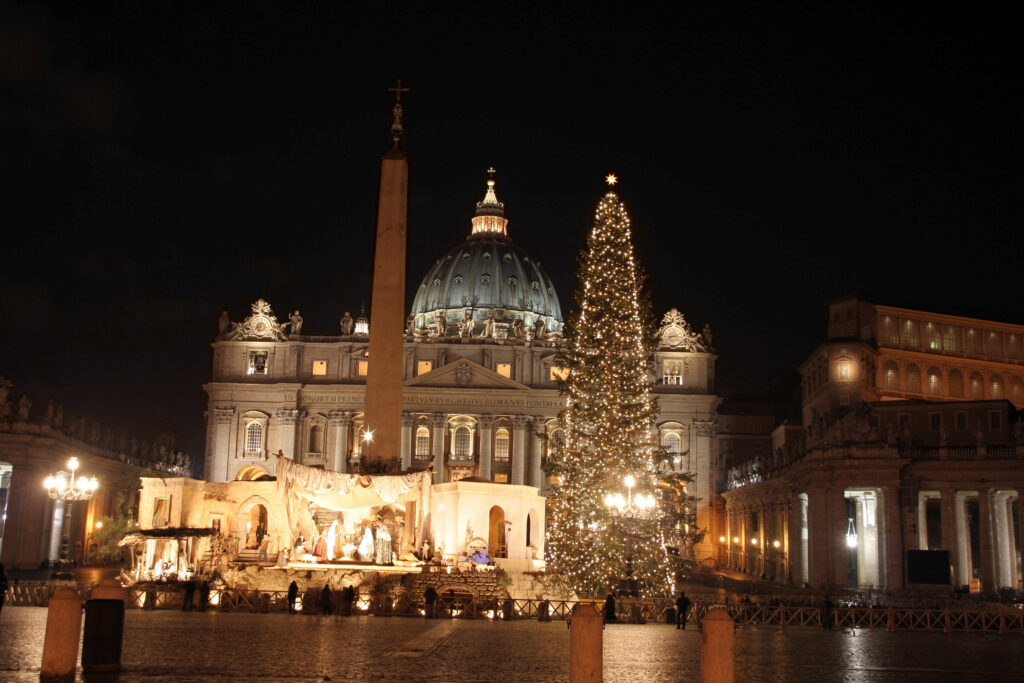
Christmas in Italy is a deeply spiritual, family-focused, and culinary marathon that spans from December 8th (Feast of the Immaculate Conception) until the Epiphany on January 6th. Unlike the emphasis on Christmas trees in the North, the Italian celebration revolves around the Nativity Scene, a tradition popularized by St. Francis of Assisi, with Neapolitan scenes being particularly famous for their elaborate, detailed craftsmanship.
The main festive event is the multi-course, meat-free feast on Christmas Eve, which often takes the form of the famous Feast of the Seven Fishes in many southern regions, followed by Midnight Mass. On Christmas Day, families gather for a lavish lunch featuring rich, hearty foods like tortellini or roasted meats.
The season concludes on Epiphany, January 6th, when the folkloric, kind-hearted witch, La Befana, flies on her broomstick to fill children’s stockings with sweets for the good and “coal” (dark candy) for the naughty, marking the end of the holiday period.
Sweden
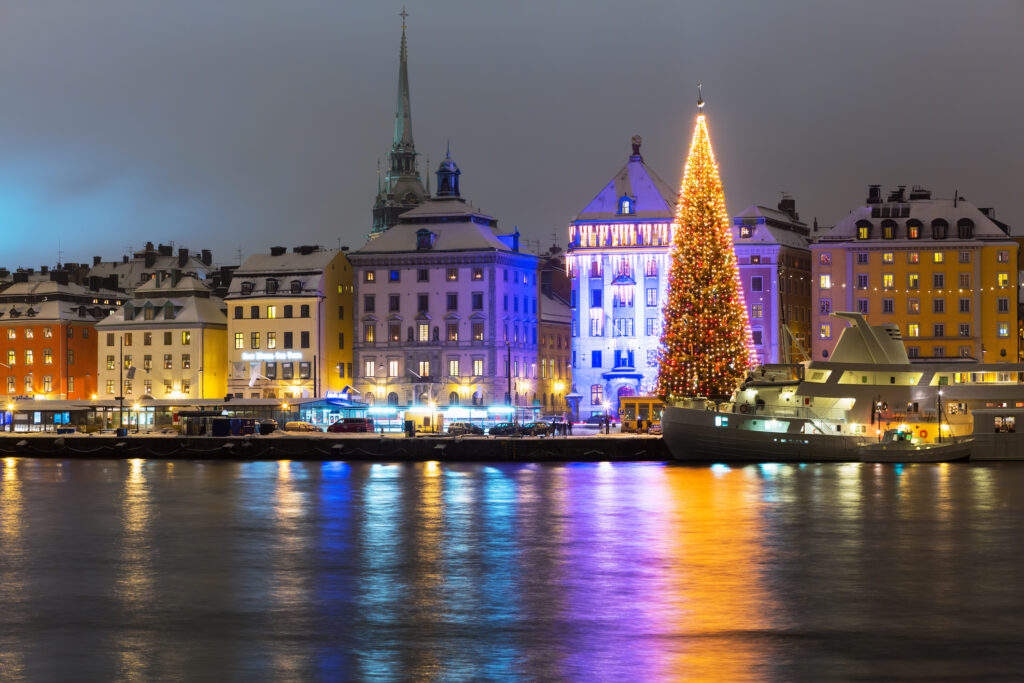
Swedish Christmas is a festival of light that builds anticipation throughout the darkest part of the year, with the main celebration occurring on Christmas Eve (Julafton). The pinnacle of the pre-Christmas season is Saint Lucia Day on December 13th, where processions led by a girl wearing a crown of candles (symbolizing light in the darkness) sing carols and serve saffron buns. On “Julafton,” or Christmas Eve, families gather for a grand buffet known as the “Julbord,” featuring herring, ham, meatballs, and “Jansson’s Temptation,” a potato and anchovy casserole.
II. The Americas
Mexico – Christmas Traditions
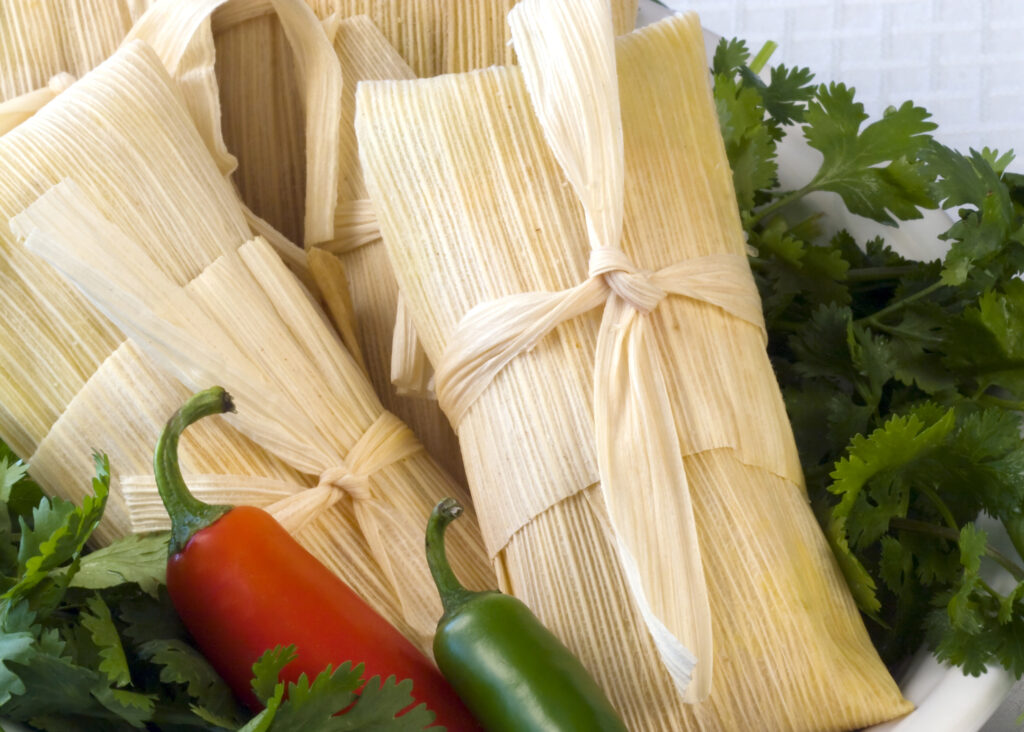
Christmas in Mexico, known as “Navidad”, is a lengthy and communal celebration, beginning with the Feast of the Virgin of Guadalupe on December 12th and concluding with the Epiphany on January 6th. The central tradition leading up to Christmas Eve is “Las Posadas,” a nine-night re-enactment from December 16th to 24th, where neighbors process through the streets, singing carols and seeking symbolic lodging for Mary and Joseph, culminating in a festive party with food, drinks, and the smashing of a seven-pointed star piñata.
The Nativity Scene is the most important decoration, often elaborate and set up by December 12th. “Nochebuena” is the night of the main family feast, often featuring traditional dishes followed by the midnight mass, or “Misa de Gallo.” While Santa Claus has gained popularity, the season officially ends on “Día de Reyes” (Three Kings Day) on January 6th, when children traditionally receive their main gifts and families share a special ring-shaped bread called “Rosca de Reyes.”
Brazil
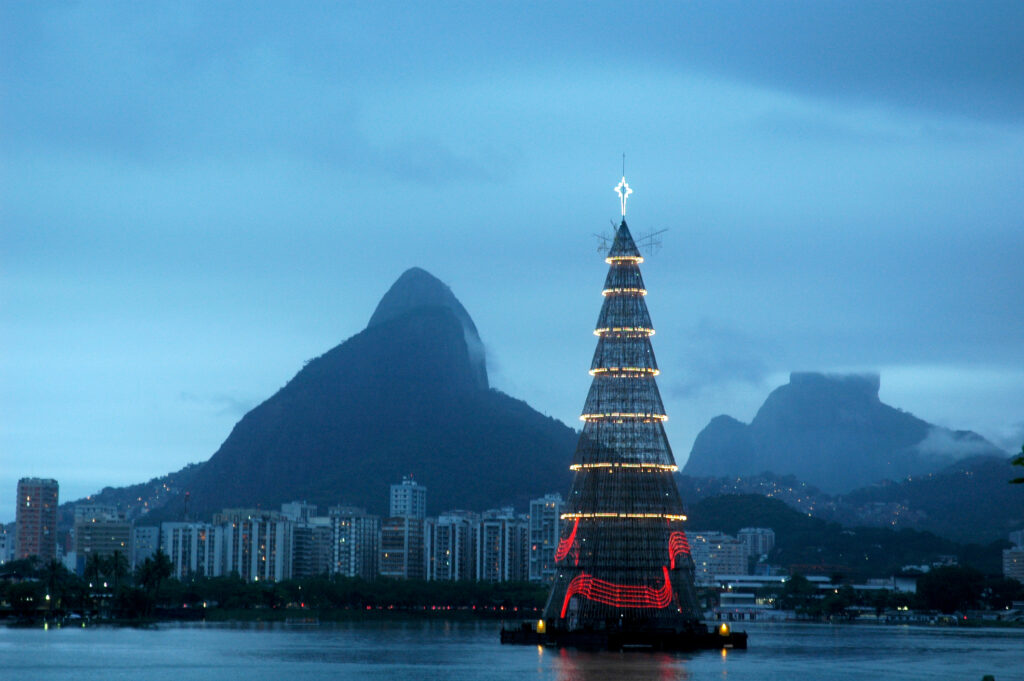
Christmas in Brazil, or “Natal,” is a vibrant, family-centric celebration taking place in the midst of the South American summer, which influences many of its customs. The main festivities revolve around Christmas Eve, when families gather late for the Midnight Mass and, crucially, the “Ceia de Natal,” or Christmas Feast; and a consequent gift exchange that begins around midnight. The traditional feast is a lavish spread featuring a blend of Portuguese and local influences, including roast turkey, plump chicken, seasoned manioc flour, rice with raisins, and the popular Italian sweet bread, “Panettone.” Santa Claus, sometimes humorously depicted in silk robes to handle the summer heat, is the gift-bringer. Another popular custom is “Amigo Secreto” (Secret Santa), where colleagues or extended family anonymously exchange gifts. Decorations often include Nativity Scenes and brightly lit Christmas trees, with major cities like Rio de Janeiro boasting spectacular displays, such as the famous floating Christmas tree.
III. Africa
Nigeria – Christmas Traditions
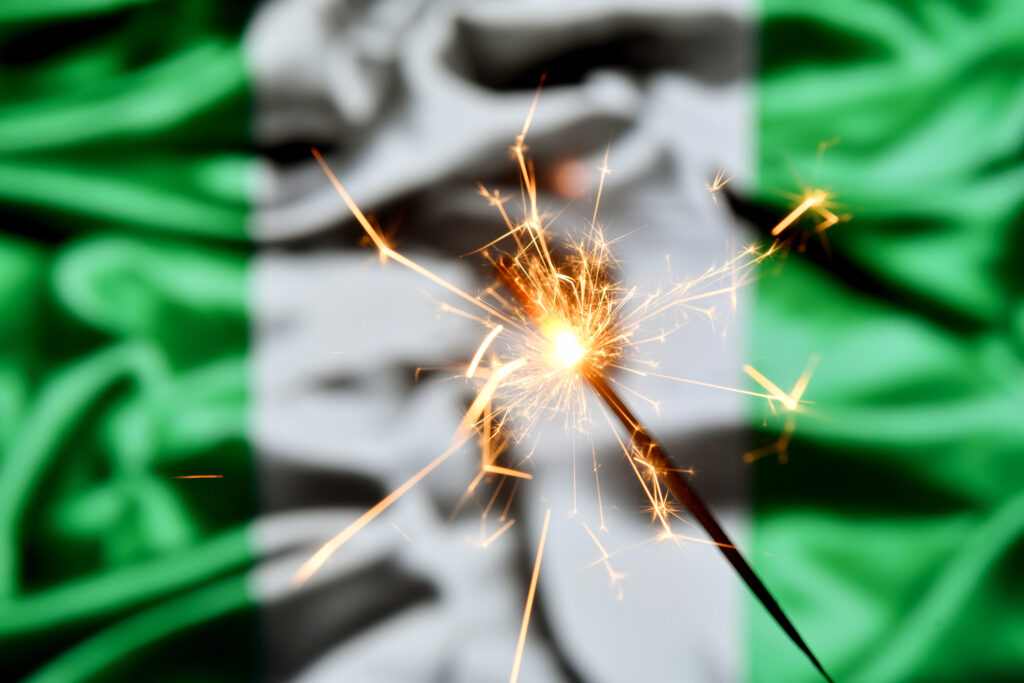
Christmas in Nigeria is a massive, communal celebration centered on family, feasting, and vibrant street festivities, often beginning with a mass “Return to the Village” as city dwellers travel to their ancestral hometowns to reunite with extended family. The holiday is a time for grand gatherings, with families exchanging gifts, particularly new “Christmas Clothes” for the children to wear to church on Christmas morning. The main feast on Christmas Day features a lavish spread where the staple is often Jollof Rice served with a variety of meats, especially chicken, goat, or beef. The atmosphere is loud and celebratory, filled with music, dancing, and the sounds of firecrackers (“knockouts” or “bangers”).
While religious services are central to the day, the celebration extends into lively street parties, colorful masquerade performances, and community sharing, with food often exchanged between neighbors, even across religious lines, emphasizing the Nigerian spirit of generosity and togetherness.
South Africa
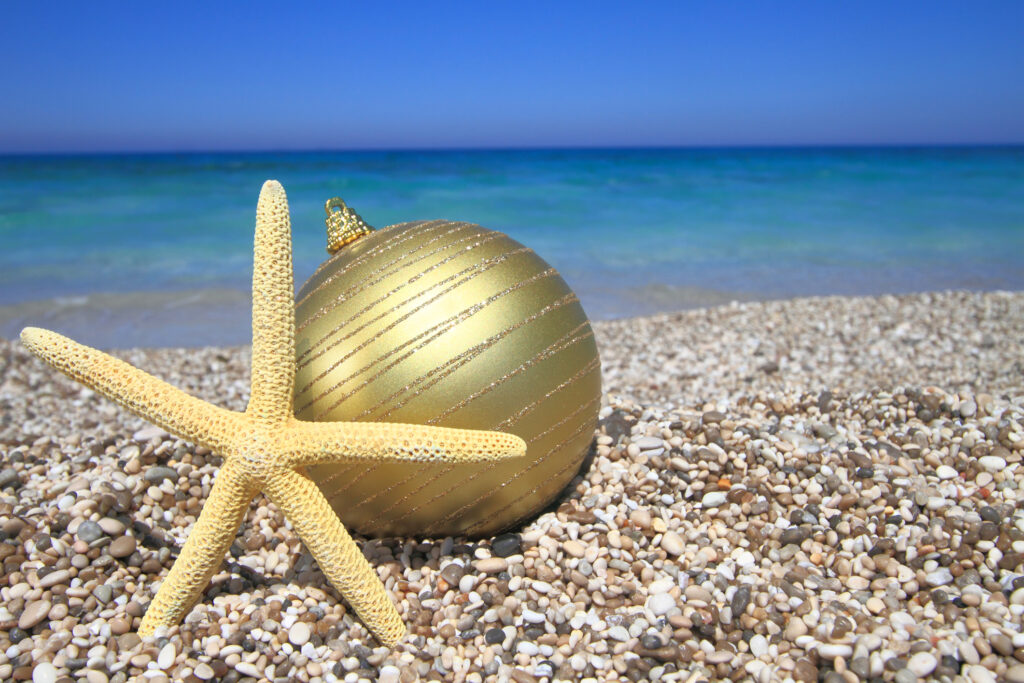
In South Africa, Christmas falls during the height of summer, drastically shaping the holiday atmosphere and traditions. Unlike the Northern Hemisphere’s winter celebrations, the focus is on outdoor gatherings, with many families enjoying a braai (barbecue) in the sunshine, or spending the day at the beach or pool. Despite the heat, the country retains many British-influenced customs, including decorated Christmas trees, hanging stockings for Santa Claus and pulling Christmas Crackers at the table. The traditional Christmas dinner may be a hot roast of turkey, duck, or gammon, often served with yellow rice and raisins, followed by desserts like Malva Pudding or Trifle, but these feasts are frequently eaten outside.
IV. Asia
Philippines – Christmas Traditions
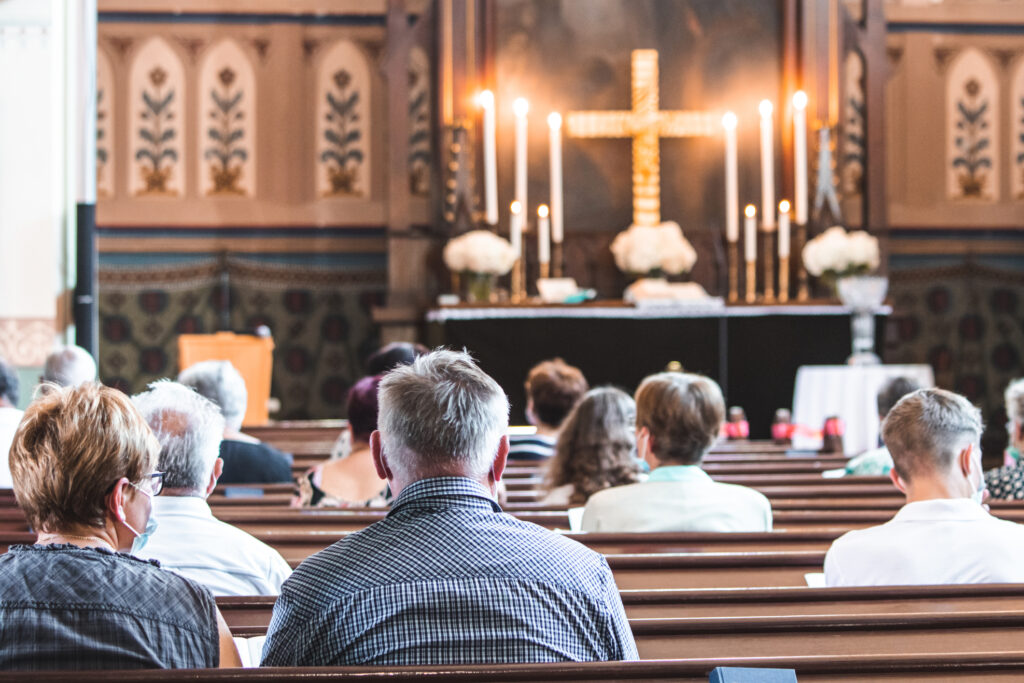
The Philippines is famous for celebrating the longest Christmas season in the world, with festivities kicking off as early as the start of the “Ber” months (September) and officially concluding on the Epiphany (Three Kings Day) on January 6th. Central to the Filipino “Pasko,” or Christmas tradition, is a deep Catholic faith and a vibrant community spirit. The nine days leading up to Christmas Eve are marked by “Simbang Gabi,” a series of early dawn masses, after which attendees often share native delicacies. The most visible decoration is the Parol, an iconic, star-shaped lantern symbolizing the Star of Bethlehem, which illuminates homes and streets.
On Christmas Eve, families gather for a grand midnight feast after the final mass, a table laden with dishes like “lechon” (roast pig. The focus is heavily on family reunion, with children visiting godparents on Christmas Day to receive “Aguinaldo” (gifts or money).
India
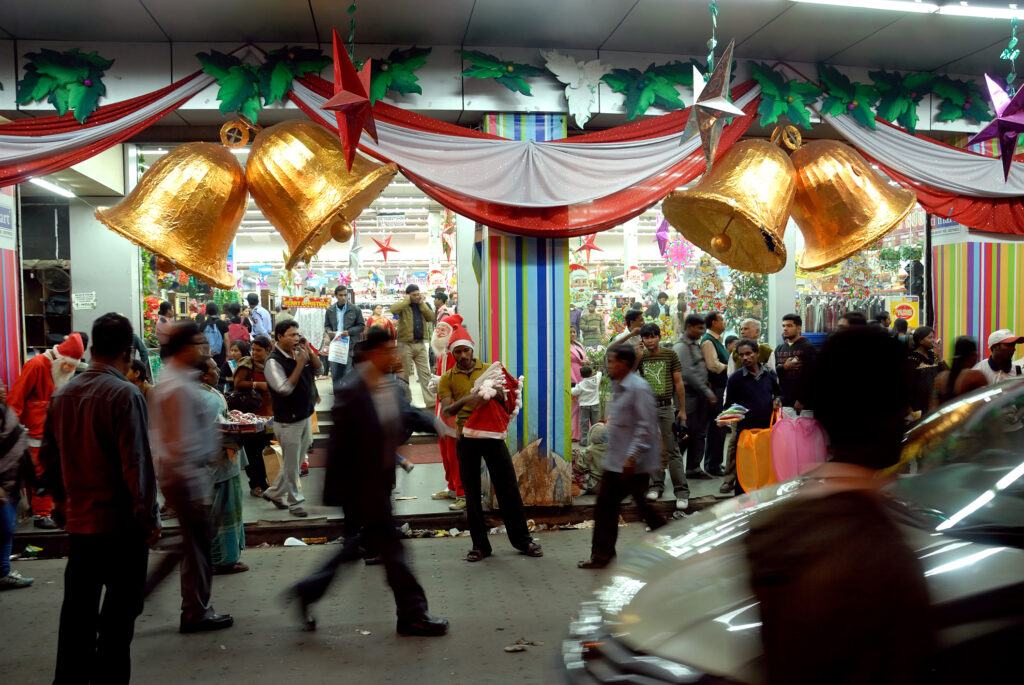
Christmas in India, known as Bada Din (“Big Day”), is a vibrant celebration that fuses Christian faith with diverse regional and cultural customs. While Christians form a minority, the holiday is widely enjoyed, emphasizing themes of community, light, and generosity. A central spiritual tradition is attending Midnight Mass, with churches decorated colorfully with Poinsettia flowers and candles. Due to the lack of traditional pine trees, families often decorate banana or mango trees or use the leaves of these sacred trees for home decoration.
In Southern India, Christians often place small, oil-burning clay lamps on their roof edges to symbolize Jesus as the light of the world. The festivities involve a grand feast, which typically includes a mix of regional specialties like biryani (a rice and meat dish) and creamy kheer (a sweet rice pudding), alongside traditional Christmas cakes and a variety of homemade kuswar (Goan sweets). Caroling is popular, with groups visiting homes, and Santa Claus gifts, sometimes on a horse and cart rather than a sleigh.
V. Oceania
Australia – Christmas Traditions
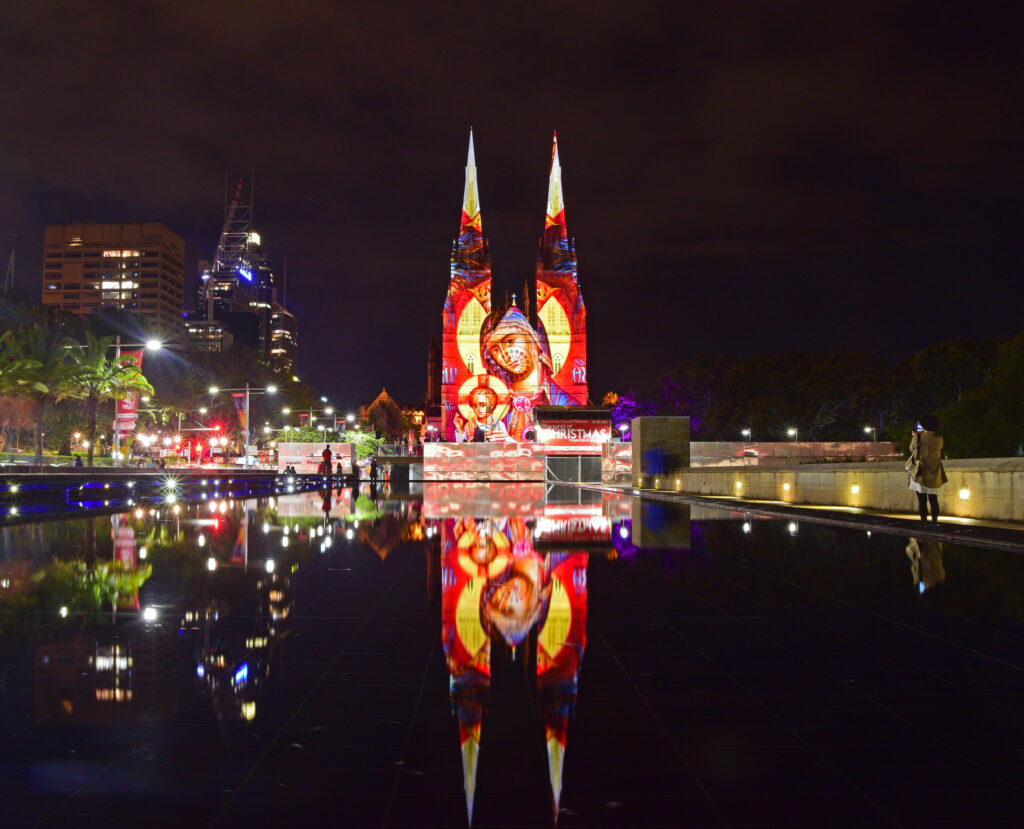
Christmas in Australia is uniquely defined by the fact that it falls during the peak of the summer season, fundamentally changing the way the holiday is celebrated. While traditions like decorating a Christmas Tree, singing Carols by Candlelight on Christmas Eve, and having Santa Claus deliver presents remain, the weather pushes the festivities outdoors. Rather than a hot roast, many families opt for a cooler Christmas Day lunch, often featuring a seafood barbecue (barbie) with prawns and fresh fish, alongside cold ham, turkey, and festive salads. Popular desserts include the British-influenced Christmas Pudding and the famously Australian Pavlova, a meringue cake topped with fresh summer fruits like mangoes and berries. Celebrations frequently take place at the beach or around the pool, with the holiday officially extending to Boxing Day (December 26th), which is traditionally spent watching the start of the Sydney to Hobart Yacht Race or the Boxing Day Cricket Test Match.
New Zealand
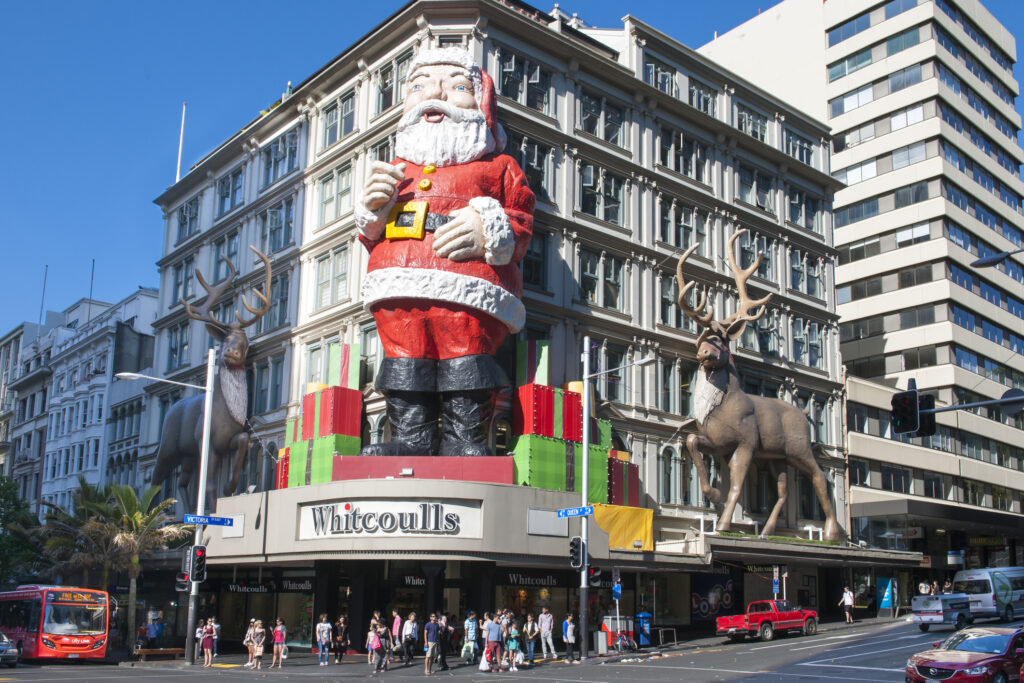
Christmas in New Zealand, or Kirihimete, is a unique blend of traditional Northern Hemisphere customs and adaptations made for the hot Southern Hemisphere summer. With the holiday falling during the school break, the emphasis is heavily on the outdoors, with families often celebrating with a barbecue (barbie) instead of a hot roast, or taking the opportunity to visit the beach or their bach (holiday home).
The native Pōhutukawa tree, which blooms with bright crimson flowers in December, is often dubbed the New Zealand Christmas Tree and features heavily in decorations, cards, and songs, alongside the traditional pine tree. While children still await gifts from Santa (Kersvader), he is often depicted wearing jandals (flip-flops) or enjoying a surf. A classic meal includes fresh seafood, ham, and seasonal salads, followed by the popular dessert Pavlova topped with fresh summer berries and kiwifruit. Boxing Day, December 26th, is a public holiday typically spent relaxing or enjoying outdoor activities.