

The best time to snorkel in Hawaii is May through October on north shores and November through April on south shores. The State of Hawaii calls north shores flat to small in summer and south shores flat to small in winter. Go in the morning, and pick a lifeguarded beach.
Best time to snorkel in Hawaii, month by month
In Hawaii the shore matters more than the island. The State of Hawaii’s Ocean Safety surf seasons page sets summer at May through October and winter at November through April. Use the table to pick the calm side first, then the beach.
| Month | Season (State of Hawaii) | North shores | South shores | Sea temperature (NWS) |
|---|---|---|---|---|
| January | Winter | Consistent huge and dangerous swells | Flat to small waves | — |
| February | Winter | Huge and dangerous swells | Flat to small waves | Coolest months: 73 or 74 degrees |
| March | Winter | Huge and dangerous swells | Flat to small waves | Coolest months: 73 or 74 degrees |
| April | Winter | Huge and dangerous swells | Flat to small waves | — |
| May | Summer | Flat to small waves | Large swells can arrive frequently | — |
| June | Summer | Flat to small waves | Large swells can arrive frequently | — |
| July | Summer | Flat to small waves | Large swells can arrive frequently | — |
| August | Summer | Flat to small waves | Large swells can arrive frequently | Warmest stretch: August and September |
| September | Summer | Flat to small waves | Large swells can arrive frequently | Warmest stretch: August and September |
| October | Summer | Flat to small waves | Large swells can arrive frequently | Near 80 degrees in late September or early October |
| November | Winter | Huge and dangerous swells | Flat to small waves | — |
| December | Winter | Huge and dangerous swells | Flat to small waves | — |
East and west shores do not follow the same split. The state says east shores can see large, rough waves from strong trade winds in both seasons. It says west shores get high surf when north swells wrap around, in summer and winter alike. A shore that suits one month can fail in the next, so check the day, not the season.
I have snorkeled around the Big Island and Kauai for years, including night snorkels off the Kona coast. The first thing I check is the swell, not the fish. On a flat day the water looks like glass and the reef is clear down to the sand. On a rough day it looks like milk.
What is the best time of year to snorkel in Hawaii?
For most visitors, summer is the easy answer. May through October is when the state describes north shores as flat to small. The warmest water of the year arrives too. The National Weather Service’s Climate of Hawai’i page says sea surface temperature reaches near 80 degrees in late September or early October.
Winter is still a good snorkeling season if you move to the south. From November through April the state describes south shores as flat to small. The tradeoff is cooler water. The National Weather Service says February and March are the coolest months, at 73 or 74 degrees, not December and January as many people expect.
The water also changes by about six degrees across the year, per the same page. That is a small swing. A rash guard or a thin top is enough for most people in winter. In summer, the sun is a bigger problem than the water.
Anyone who has driven to a beach on the strength of a photo knows the road can end at a sign that says high surf. The calendar helps you choose the shore. The sign decides whether you get in. If it says no, move to another beach on the same island. The state says calmer conditions can often be found elsewhere on the island.
Where to snorkel in Hawaii in winter
Go south, then go dry. The state describes south shores as flat to small in winter. The National Weather Service says leeward areas tend to be sunny and dry, while windward slopes get much more cloud and rain. Wet side versus dry side decides more of my plans than the month does.
On Kauai, that points to the south shore around Poipu. Our best beaches in Poipu guide sorts them by snorkeling, kids and wildlife. On the Big Island, it points to the Kona side. Our Big Island guide explains the Kona and Hilo split in plain terms. When Hilo is socked in, Kona is often clear.
North-shore reefs flip with the seasons. Tunnels Beach on Kauai is a good example. We cover the gap between summer and winter in our Tunnels Beach guide. In winter, treat north-shore reefs as places to look at from the sand.
What time of day is best to snorkel in Hawaii?
Morning. The state’s Snorkeling Safety page says mornings usually offer better conditions, visibility and marine life. It says to avoid dawn, dusk and murky water.
Plan your first stop for the morning and your second for after lunch only if the first looked good. Do not let a tour or a parking lot rush you into water that looks wrong. The state’s guidance is plain. If conditions appear dangerous, do not go snorkeling.
When is Hanauma Bay open for snorkeling?
The City and County of Honolulu says Hanauma Bay Nature Preserve is closed every Monday and Tuesday. It also says sewer work at the preserve is expected to run until summer 2027, with another temporary closure expected in early 2027 and dates to be announced.
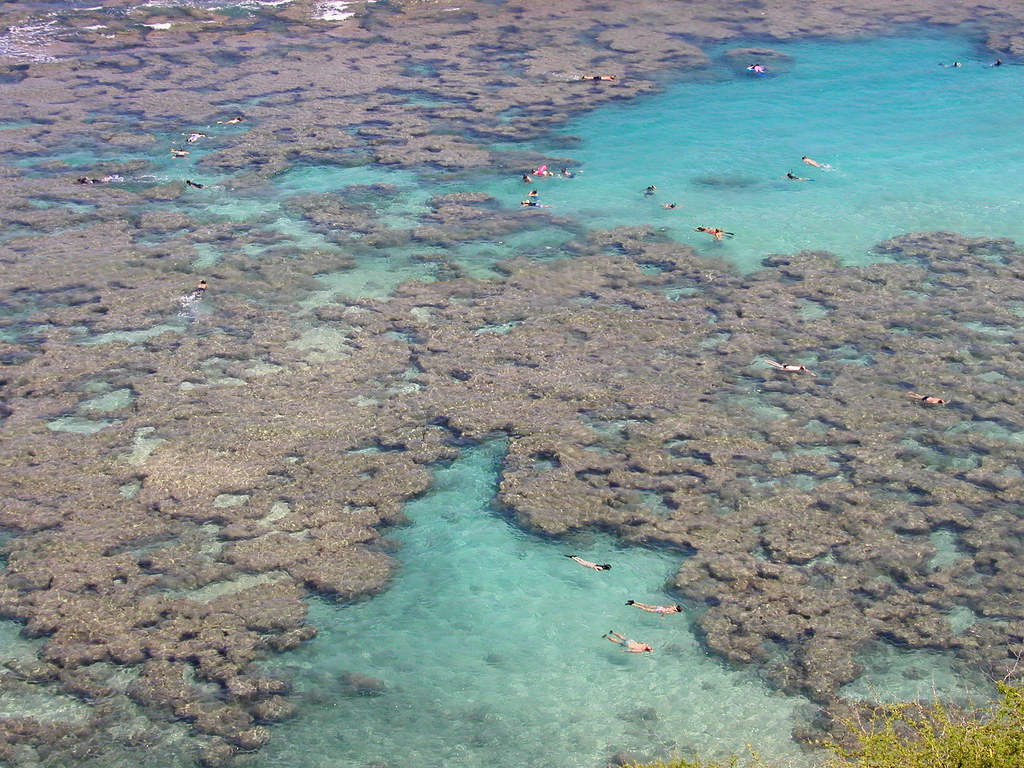
Hours and rules can change, so check with the City and County of Honolulu before you go. Pick a Wednesday through Sunday and plan the bay as a morning stop. If your flight lands on a Monday, move the bay to the end of the week.
Is snorkeling in Hawaii safe?
It is safe when you respect the conditions. The state’s snorkeling page says all snorkelers should be experienced at swimming in the ocean. It says to always snorkel with a buddy, check with a lifeguard before you enter and avoid rocky areas and shallow reef where standing is difficult.
Getting in and out is where trouble starts. The state warns that waves can disorient you or knock you under, which can send water into your snorkel. Its shorebreak page says Hawaii has no continental shelf to slow incoming waves, so shorebreak can be strong even on small days. Never dive headfirst. Duck under oncoming waves.
Currents come next. The state’s strong currents page says they can exist without a posted sign and may not be visible. If one carries you out, stay calm, float and go with the flow rather than fight it. Signal for help by yelling toward the shore and waving your arms. Anyone who has swum against a current knows the shore never gets closer.
Check your gear. Anyone who has worn a leaking mask knows the first ten minutes are spent fixing it, not watching fish. The state says to make sure your mask fits and does not leak, and to confirm your fins fit snugly. On full-face masks, the state says there is not enough evidence to show a direct increase in risk, but it tells people with an OUSPT brand mask not to use it, citing a March 2026 CPSC warning. Rent only from a licensed vendor.
How close can you get to turtles, seals and whales while snorkeling?
Not close. NOAA Fisheries’ viewing guidelines say to stay at least 10 feet from sea turtles on land or in water, and at least 50 yards from seals, on shore or in the water. They say swimming with spinner dolphins is prohibited, with a 50-yard minimum. Do not touch, feed, chase or ride any wildlife.
Whales have their own rule. The sanctuary’s regulations page says approaching within 100 yards of a humpback by any means is prohibited, and swimmers are covered. NOAA says humpbacks are generally seen from November through April, so a winter snorkel can overlap with whale season. If you see a blow, stay out of its path.
I keep my distance from seals and turtles every time, even when one is resting right where I planned to get in. I walk down the beach and enter somewhere else. The animal was there first.
What sunscreen can you use to snorkel in Hawaii?
Hawaii’s Act 104 makes it unlawful to sell, offer for sale or distribute for sale sunscreen containing oxybenzone or octinoxate in Hawaii, starting January 1, 2021. The text allows sales with a prescription. Buy a reef-safe product before you fly, since you will want it on your first morning.
I make reef-safe sunscreen a habit, and I put it on before I reach the sand. Anyone who has applied lotion at the water’s edge knows how quickly it ends up in the water. A long-sleeve rash guard cuts the amount you need. Our Hawaii packing list covers the rest of the beach bag.
Which month fits your snorkel trip?
- Calmest north-shore water: May through October, per the State of Hawaii.
- Calmest south-shore water: November through April, per the State of Hawaii.
- Warmest water: August and September, near 80 degrees by late September or early October, per the National Weather Service.
- Coolest water: February and March, at 73 or 74 degrees.
- Best time of day: morning.
- Avoid planning around: Mondays and Tuesdays at Hanauma Bay, which is closed.
For one pick, I would book September. The water is at its warmest and the north shores are in their summer pattern. Check the forecast first. Keep a flexible day and read the lifeguard board before you get in.
Updated November 2026.
Snorkeling in Hawaii FAQ
What is the best month to snorkel in Hawaii?
It depends on the shore. May through October suits north shores, and November through April suits south shores, per the State of Hawaii. September has the warmest water.
Can you snorkel in Hawaii in winter?
Yes, on south shores, which the state describes as flat to small in winter. Avoid north shores, where the state reports huge and dangerous swells. Ask a lifeguard before you enter.
What time of day is best for snorkeling in Hawaii?
Morning. The state’s snorkeling page says mornings usually offer better conditions, visibility and marine life, and says to avoid dawn, dusk and murky water.
How close can you get to a sea turtle in Hawaii?
NOAA Fisheries says to stay at least 10 feet away, on land or in water. Keep at least 50 yards from seals. Do not touch or feed any wildlife.
Is reef-safe sunscreen required in Hawaii?
Hawaii’s Act 104 bans the sale of sunscreen containing oxybenzone or octinoxate without a prescription, starting January 1, 2021. Buy a reef-safe product before you swim.
Conditions change. Check surf, weather and lifeguard notices before you get in.
