

The allure of the marathon transcends a simple 26.2-mile distance; it is a global quest for achievement, personal bests, and the experience of running through the world’s most iconic cities. For any serious distance runner, the gold standard of international competition is defined by the Abbott World Marathon Majors (AbbottWMM), a prestigious series comprising the world’s largest and most celebrated road races.
Collectively, these races represent the pinnacle of global marathon running, drawing both the world’s fastest elite athletes and hundreds of thousands of amateur runners who dream of earning the coveted Six-Star Finisher medal.
In this article, we’ll explore several of the best international marathons in the world, ones that involve competitive rigor or a unique setting.
I. World Marathon Majors
Berlin Marathon
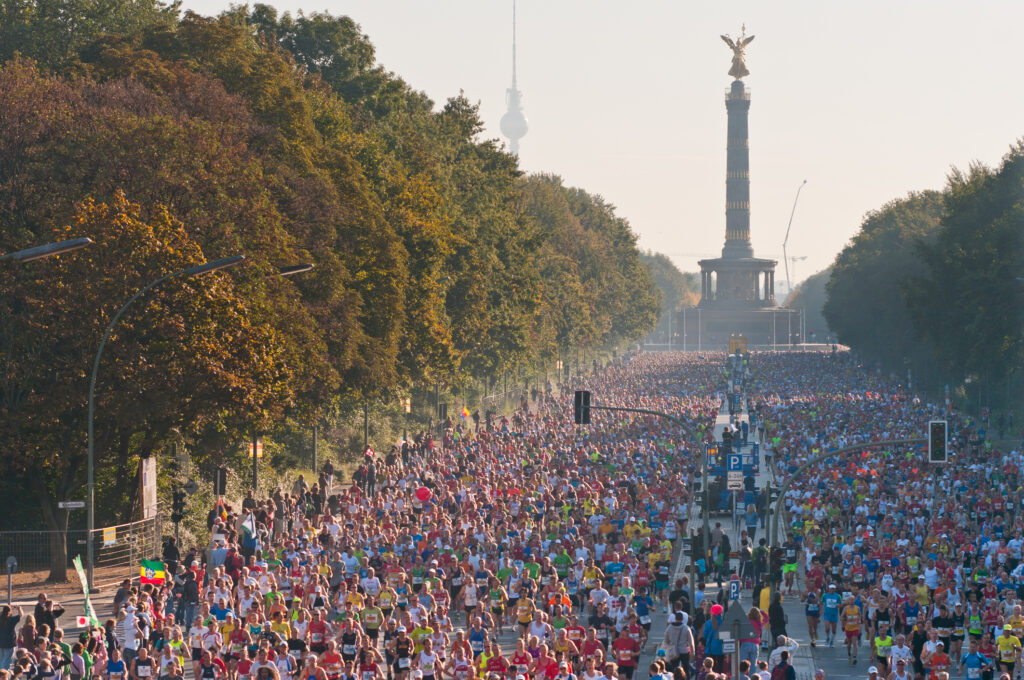
Location: Berlin, Germany
Qualifications: The BMW Berlin-Marathon offers a competitive Good For Age (GFA) qualification path, such as Sub 2:45:00 for men (ages 18-44) and Sub 3:10:00 for women (ages 18-44). This time qualification path is similar to the guaranteed entry options available at the Bank of America Chicago Marathon and the strict Boston Marathon (Boston Qualifier or BQ), though Boston is unique as meeting the BQ time only makes you eligible to apply, often requiring you to run several minutes faster than the standard to guarantee a bib.
History: The BMW Berlin-Marathon, founded by baker and running enthusiast Horst Milde in 1974, began humbly as the “Berlin People’s Marathon” with just 286 participants, running through the Grunewald forest in West Berlin. Its history is profoundly intertwined with German reunification: the race made its momentous leap into the city center in 1981, running alongside the Berlin Wall, but the most symbolic year was 1990. Just three days before German reunification, the marathon course led runners for the first time through the iconic Brandenburg Gate and into the former East Berlin, turning the race into a global symbol of unity and freedom.
Since then, Berlin’s exceptionally flat and fast courses, which traverse historical landmarks like the Reichstag and Kaiser Wilhelm Memorial Church; has cemented its reputation as the fastest marathon in the world, producing a record 13 (and counting) men’s and women’s world records, including multiple marks by legends like Haile Gebrselassie and Eliud Kipchoge. As a founding member of the Abbott World Marathon Majors (AbbottWMM) series, the Berlin Marathon has evolved from a local fun run into an elite-level race for nearly 50,000 international athletes aiming for world records, personal bests, or a guaranteed entry via its popular Good For Age (GFA) qualification times. Unequivocally, one of the best international marathons in the world is located in Berlin.
London Marathon – Best International Marathons
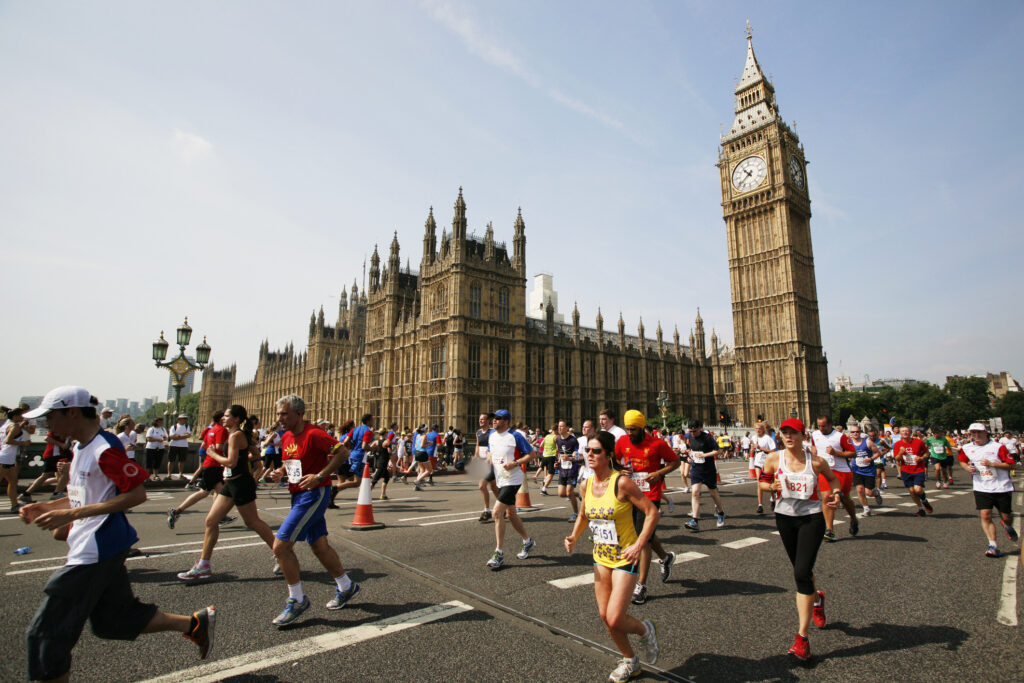
Location: London, England
Qualifications: The TCS London Marathon, renowned for its massive scale and record-breaking charity fundraising, is one of the most difficult of the Abbott World Marathon Majors (AbbottWMM) to enter, particularly through time qualification. While Berlin and Boston have highly sought-after Good For Age (GFA) or Boston Qualifier (BQ) standards open to runners worldwide, the London Marathon reserves its primary GFA entry pathway exclusively for residents of the United Kingdom.
International runners who meet the GFA standards cannot utilize this route and must instead rely on the highly competitive International Ballot (Lottery), which has historically low odds due to the race’s global appeal, or apply for a much faster Championship Entry which requires UK Athletics membership. Consequently, the most viable guaranteed entry options for non-UK runners are through a select number of official International Tour Operators or by securing a coveted, high-fundraising spot via one of the race’s many Charity Partners, solidifying the London Marathon’s status as a top-tier race defined less by universal time standards and more by its philanthropic commitment and scarcity of guaranteed entries.
History: The modern TCS London Marathon was born from inspiration and ambition, co-founded by Olympic steeplechase medalists Chris Brasher and John Disley following their run in the 1979 New York City Marathon. The inaugural London Marathon was held on March 29, 1981, drawing nearly 8,000 runners and immediately capturing the public’s imagination, highlighted by the symbolic hand-in-hand finish of the men’s joint winners, Dick Beardsley and Inge Simonsen. Brasher and Disley’s vision was twofold: to create a world-class sporting event showcasing the best of London’s landmarks, and, crucially, to use its success to generate enormous funds for charity and inspire public activity.
This philanthropic focus has become the defining characteristic of the event; the London Marathon consistently holds the Guinness World Record for the largest annual single-day fundraising event, having raised well over £1 billion for thousands of charitable causes since its inception. The iconic course itself, winding from Blackheath past sights like the Cutty Sark, over Tower Bridge, and finishing on The Mall in front of Buckingham Palace, has also served as a stage for legendary speed, with multiple world records set by female stars like Grete Waitz and Paula Radcliffe. Now one of the six original Abbott World Marathon Majors (AbbottWMM), the London Marathon maintains its prestige through both its elite competition and its unmatched capacity to transform individual effort into global charitable impact.
Sydney Marathon
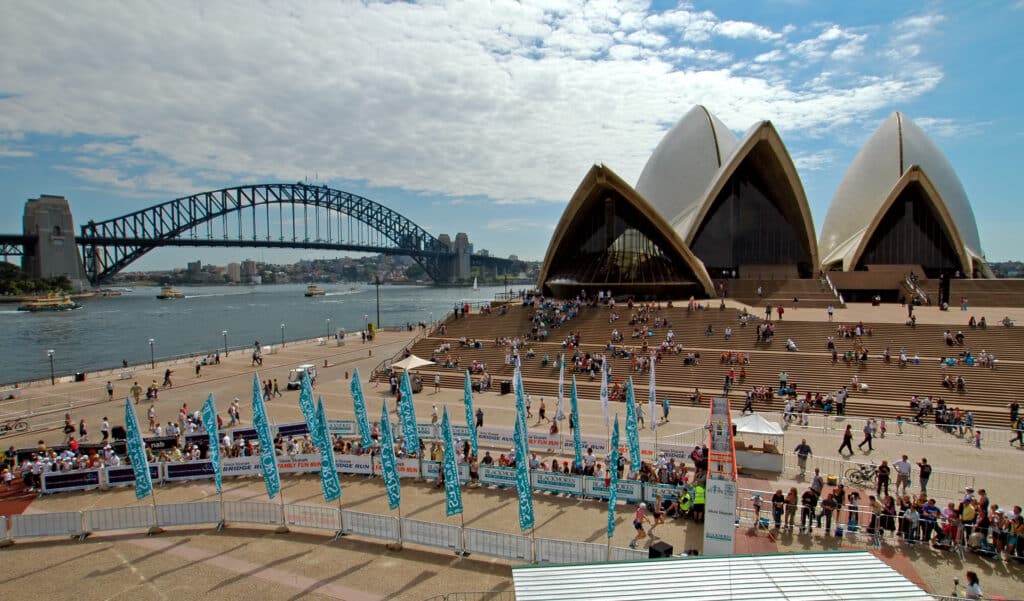
Location: Sydney, Australia
Qualifications: The TCS Sydney Marathon has recently ascended to the status of an Abbott World Marathon Major (AbbottWMM), making it the newest and first-ever Major in the Southern Hemisphere. Unlike the established systems of Berlin or Boston, Sydney’s entry pathway is still evolving, but for international runners, the primary routes are the General Ballot (Lottery), the purchase of guaranteed entry through an Official International Tour Operator, or running for a Charity Partner.
However, the marathon does offer a distinct path for fast runners called the High Performance Program (HPP), which provides priority, time-based entry to the fastest applicants. It is critical to note that the HPP operates on a selective, fastest-first basis, meaning meeting the minimum time only makes a runner eligible to apply; the entry spots are awarded to the fastest overall qualifiers until the limited number of HPP spots is filled, similar to the competitive cut-off process of the Boston Marathon.
History: The TCS Sydney Marathon has a distinguished, modern history rooted in the city’s greatest athletic event: the 2000 Summer Olympics. Originally established as “The Host City Marathon” in April 2000 as a test event, the race was explicitly designed to be a lasting participant legacy of the Sydney 2000 Olympic Games, following the same iconic course. Its route is one of the world’s most scenic, starting in North Sydney, leading runners over the globally recognizable Sydney Harbour Bridge (traffic-free), and culminating in a spectacular finish area in front of the Sydney Opera House.
Since its formal inception in 2001, the Sydney Marathon has grown in both prestige and size, achieving the highly respected World Athletics Platinum Label and consistently breaking Australian participation records, while also raising millions for charitable organizations. The event’s crowning achievement came in November 2024, when it was officially confirmed as the seventh member of the Abbott World Marathon Majors (AbbottWMM) series, becoming the first Major in the Southern Hemisphere.
Tokyo Marathon – Best International Marathons
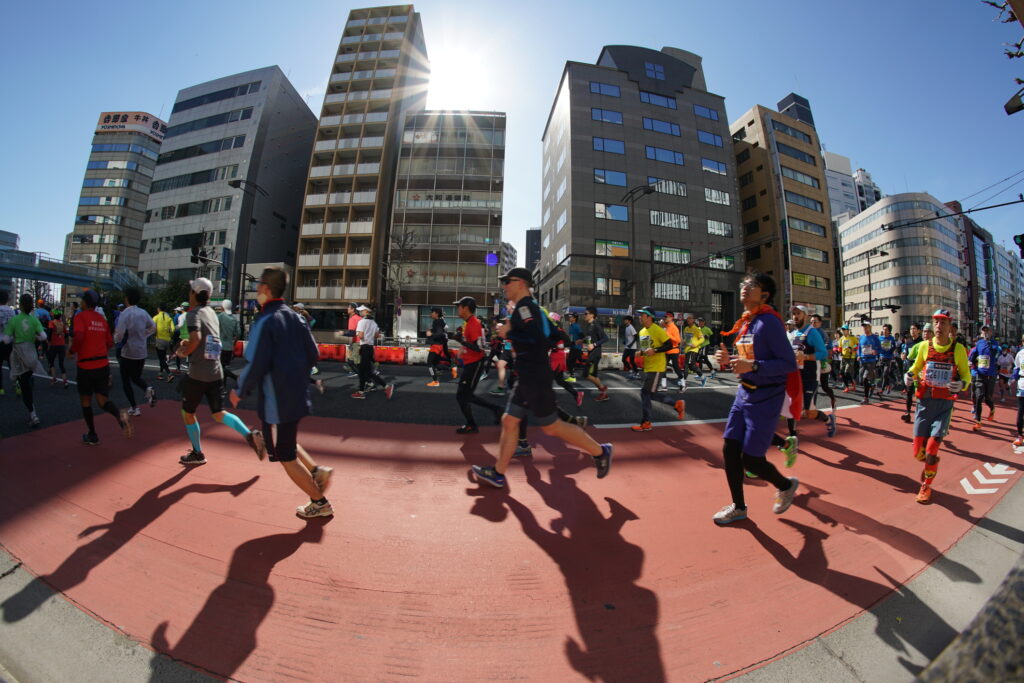
Location: Tokyo, Japan
Qualifications: Another of the best international marathons is the Tokyo Marathon, the youngest of the original six Abbott World Marathon Majors (AbbottWMM. The Tokyo Marathon is internationally renowned for being one of the most difficult to gain entry to, particularly through its limited time-based path. The primary entry method for international runners remains the extremely low-odds General Lottery or securing a guaranteed spot via a high-fundraising Charity Partner.
However, the event does offer a highly selective time-qualification route called RUN as ONE – Semi-Elite (Overseas). This program is designed for very fast runners residing outside of Japan, with stringent qualification times that are well into the sub-elite category (e.g., typically Sub 2:28:00 for men and Sub 3:09:00 for women). Crucially, meeting these fast standards does not guarantee entry. The program is capped at a very small number of participants and if the number of applicants exceeds this quota, the spots are awarded on a fastest-first basis until the field is filled. This process means the actual cut-off time required for entry is often significantly faster than the posted minimum standard, making the Tokyo Marathon’s time qualification arguably the most competitive and challenging of all the Majors.
History: The modern Tokyo Marathon is a relatively young event, emerging in 2007 through the merger of two long-running, separate races: the elite-only Tokyo International Marathon and the more participatory Tokyo City Road Race. This unification created a single, massive metropolitan event designed to rival the scale and popularity of the world’s most famous races. From its inception, the Tokyo Marathon was immediately embraced by the public, becoming an instant success that offered runners a spectacular tour of the city, passing major landmarks like the Imperial Palace, the Ginza district, and Tokyo Tower.
The race quickly gained international recognition, and by 2013, it was formally admitted as the sixth member of the Abbott World Marathon Majors (AbbottWMM) series, solidifying its place as Asia’s premier marathon. Its history is marked by its rapid professionalization and global appeal; it is now renowned for its incredible organization, passionate crowds, and the unique cultural experience it offers runners from around the world. Though it is globally famous for its extremely competitive entry lottery, the Tokyo Marathon successfully realized its mission to become an iconic event, bridging the gap between historical elite competition and modern mass participation on a world stage.
II. Scenic Marathons
Prague Marathon
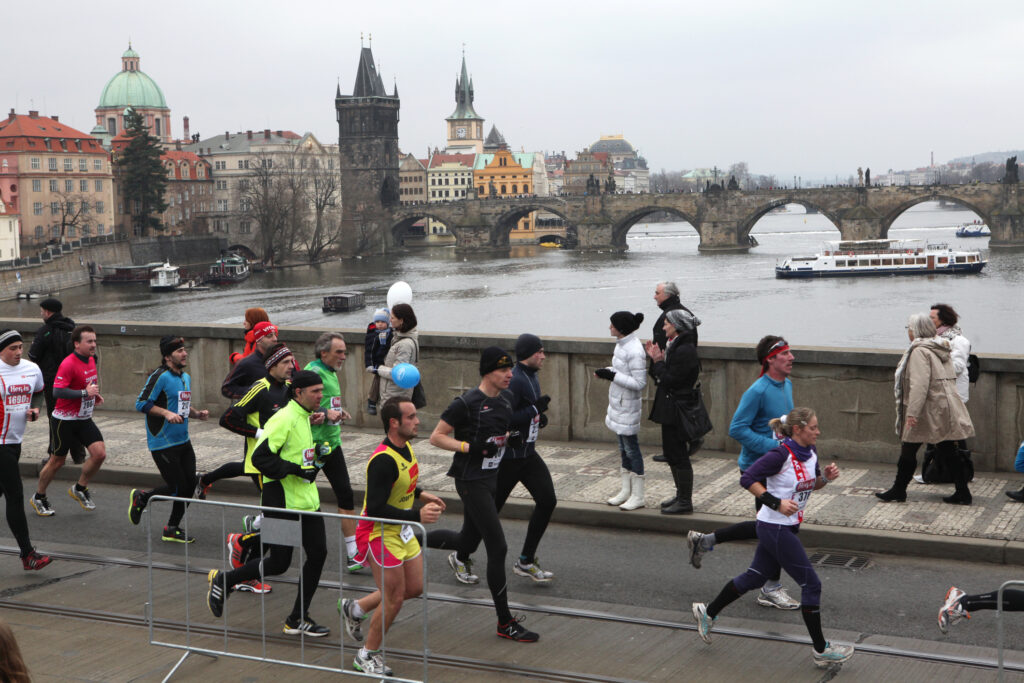
Location: Prague, Czech Republic
Scenic Route: The Prague International Marathon (now the ORLEN Prague Marathon) was founded in 1995 by Italian entrepreneur Carlo Capalbo with the explicit goal of transforming the Czech capital into the stage for one of the world’s most beautiful races; and one of the world’s best international marathons. The idea was famously conceived over a pint of beer, with a course draft sketched on a napkin, and enthusiastically supported by Czech running legend, the four-time Olympic champion Emil Zátopek. Though the inaugural race had fewer than 1,000 marathon finishers, its historical significance and rapid growth were cemented when the course was routed through the city center in 1998, granting runners the unforgettable, exclusive experience of crossing the iconic Charles Bridge.
The race’s international reputation rests heavily on its breathtakingly scenic, yet fast, course. Beginning and ending in the historic Old Town Square, the route winds past Prague’s most stunning landmarks—including the Astronomical Clock, Prague Castle, and the National Theatre—while crossing the Vltava River multiple times. This blend of Gothic and Baroque architecture provides a truly immersive experience, earning the event the World Athletics Elite Label and frequent accolades as one of the most picturesque marathons globally.
Athens Marathon – Best International Marathons
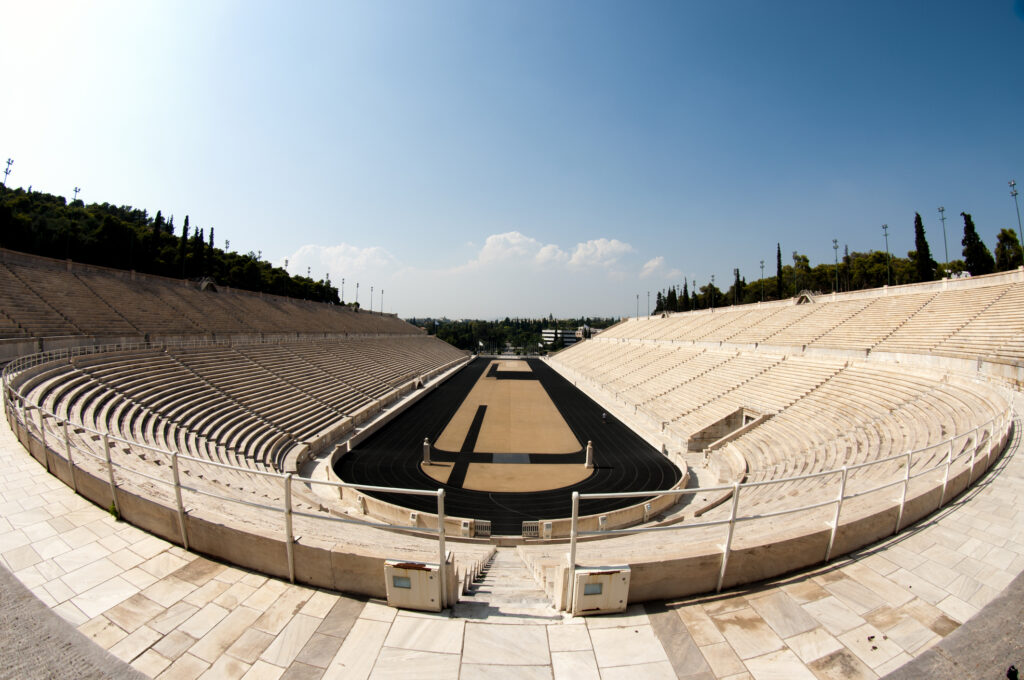
Location:Athens, Greece
Scenic Route: The Athens Marathon, officially designated as “The Authentic”, holds a unique and sacred place in global running history, as its significance is not merely athletic but mythological. The entire race exists to commemorate the legendary run of the Greek messenger, Pheidippides, who in 490 B.C. is said to have run from the battlefield of Marathon to Athens to announce the Greek victory over the invading Persians before collapsing and dying.
The course itself, which starts in the historical town of Marathon and finishes inside the magnificent, all-marble Panathenaic Stadium (used for the 1896 and 2004 Olympics), provides an unparalleled connection to antiquity. While breathtakingly scenic as it moves from olive groves to the heart of the capital, it is also considered perhaps the most difficult major marathon course in the world. Runners face a steady, prolonged uphill climb for approximately 20 kilometers (between the 10 km and 31 km marks) before a final descent into Athens. Finishing inside the historic stadium, where millions of spectators have watched history unfold, offers every runner a powerful, emotional triumph as they cross the finish line.
Cape Town Marathon

Location: Cape Town, South Africa
Scenic Route: The Sanlam Cape Town Marathon is a relatively modern event in its current form, being re-established in 2007 and rapidly ascending the global ranks to become Africa’s only World Athletics Gold Label road race. It stands as one of the world’s best international marathons and one of the most scenic.
The race’s international appeal is due to its potent combination of scenic beauty, historical landmarks, and a notably fast, flat course—a rare feat in a city famed for its mountains. The route starts and finishes in the Green Point area, taking runners on a spectacular loop that offers panoramic views of Table Mountain (one of the New 7 Wonders of Nature) as an ever-present backdrop. Runners are immersed in the city’s diverse culture as they pass through historic districts like District Six and Woodstock, while also running past the City Hall (where Nelson Mandela gave his first public speech after his release in 1990) and enjoying refreshing coastal stretches along the Sea Point Promenade near the Atlantic Ocean.
Rio de Janeiro Marathon – Best International Marathons
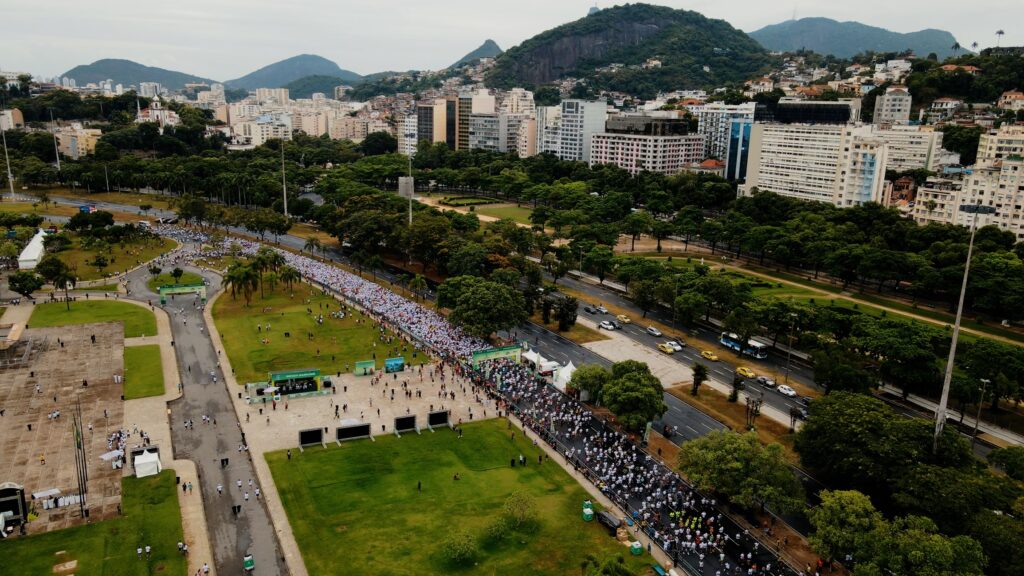
Location: Rio de Janeiro, Brazil
Scenic Route: TheRio de Janeiro Marathon as established in 1979 by Brazilian runner and Olympian Eleonora Mendonça, setting its own place in history as one of the oldest and largest road races in South America. The race has since grown into a massive annual running festival, attracting tens of thousands of participants and gaining the prestigious World Athletics Label Road Race status. Its modern fame rests almost entirely on its spectacular, iconic course that fully embraces the city’s unique geographical beauty, earning it the affectionate nickname, the “Rock in Rio for runners.”
Runners are treated to an unparalleled 42.2-kilometer journey with the Atlantic Ocean and famous beaches like Copacabana, Ipanema, and Leblon on one side, and the dramatic backdrop of the Serra do Mar Mountains and the towering Christ the Redeemer and Sugarloaf Mountain on the other. This fusion of urban energy and natural splendor makes the Rio Marathon one of the most picturesque and memorable marathons in the world, combining the challenge of the distance with the festive atmosphere and stunning vistas of the “Marvelous City.”