

Your calendar is stacked, your phone won’t stop buzzing, and yet on the other side of those screens, the planet is staging a show that has been running for billions of years. Volcanoes write new chapters of crust with molten ink, glaciers carve poems in stone, deserts sing when the wind hits the dunes just right. Natural wonders aren’t just postcard pretty; they’re deadlines-defying reminders that there’s a world larger than your to-do list—and you’re part of it.
Think of them as time machines and textbooks rolled into one: cathedrals built by pressure, light, and patient water. A canyon tells you how a river thinks. A reef hums with engineering lessons in color and cooperation.
In this article, we’ll explore several of the natural wonders of the world, discussing why they remain so germane to this day and why they still engender awe.
Great Barrier Reef – Queensland, Australia
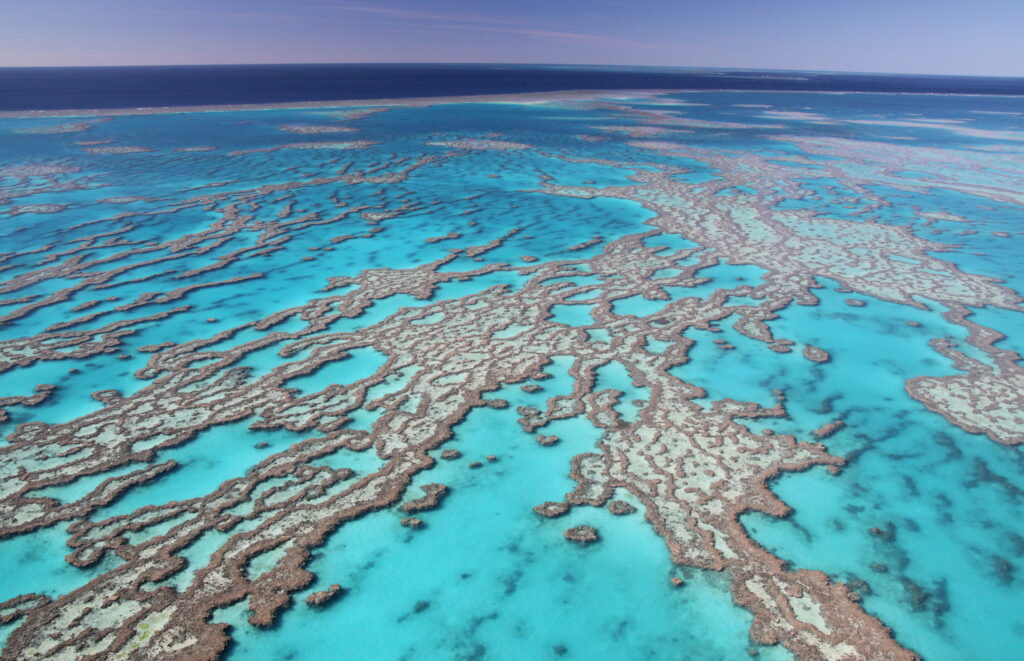
The Great Barrier Reef, located off the coast of Queensland, Australia, is a truly awe-inspiring natural wonder, widely recognized as the world’s largest coral reef system. This immense living structure, so vast it can be observed from space, stretches over 2,300 kilometers and encompasses nearly 3,000 individual reefs and 900 islands. It’s a UNESCO World Heritage Site, celebrated for its unparalleled biodiversity, hosting thousands of species including vibrant corals, over 1,500 types of fish, numerous marine mammals like whales and dolphins, and six of the world’s seven sea turtle species. Beyond its breathtaking beauty and ecological significance, the Great Barrier Reef holds deep cultural importance for Indigenous Australian communities and serves as a vital economic driver through tourism.
Aurora Borealis – Northern Hemisphere – Natural Wonders of the World
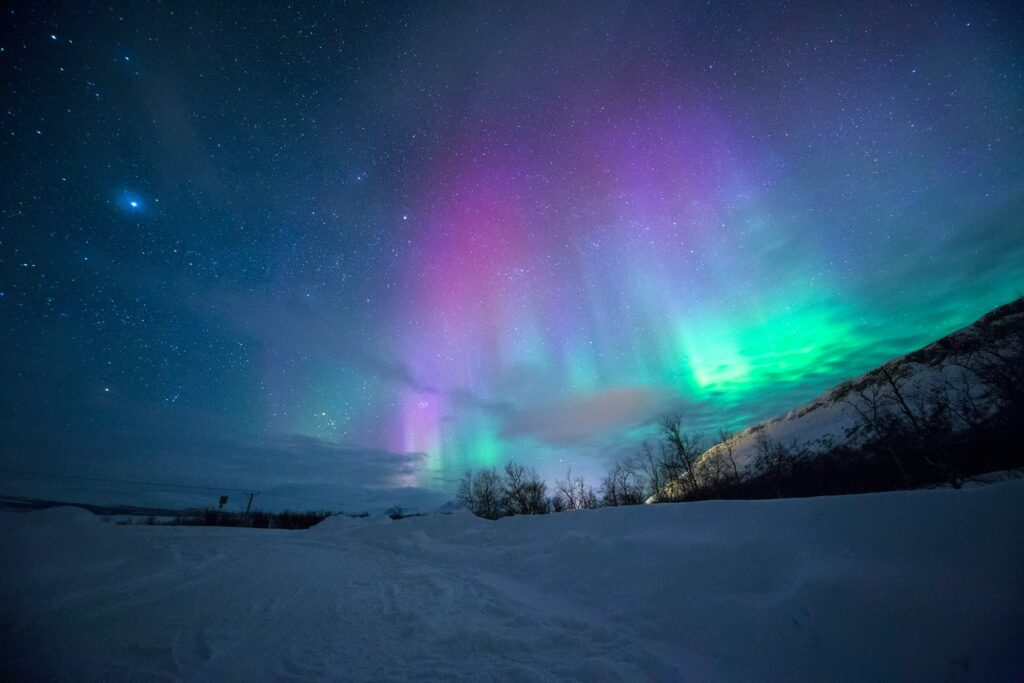
The Aurora Borealis, commonly known as the Northern Lights, is a breathtaking natural phenomenon that is often considered one of the world’s most spectacular natural wonders. This vibrant light display, predominantly seen in the high-latitude regions of the Northern Hemisphere, is the result of energized particles from the sun colliding with gases in Earth’s upper atmosphere. As these charged particles, propelled by solar winds, interact with atmospheric oxygen and nitrogen, they emit photons, creating the characteristic shimmering curtains, arcs, and rays of green, red, blue, and purple light.
Dead Sea – Israel and Jordan
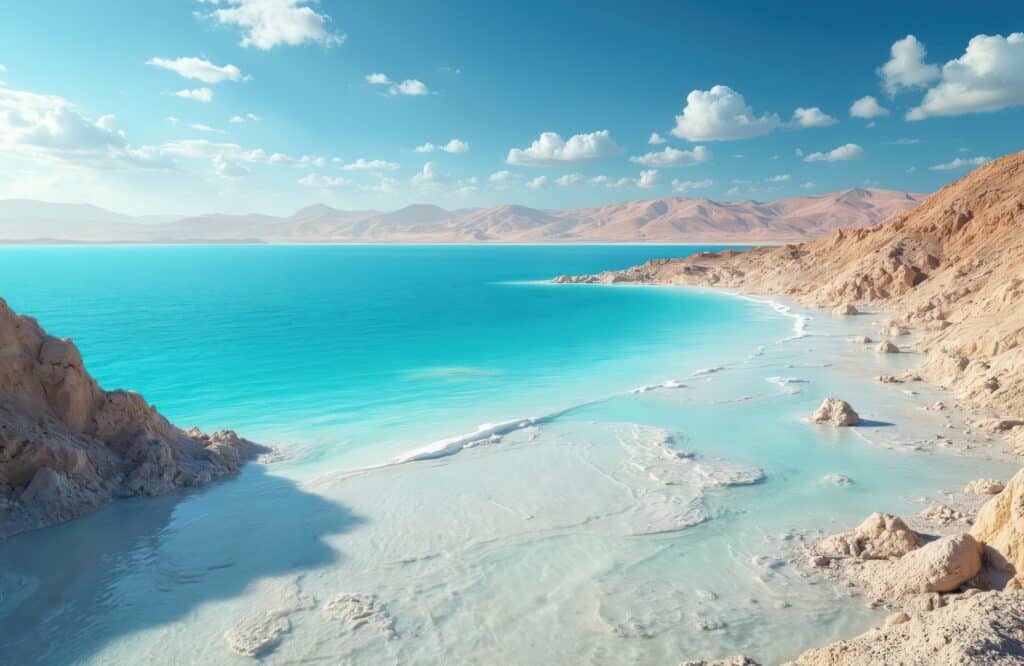
The Dead Sea, nestled between Israel and Jordan, is a truly unique and compelling natural wonder, renowned for its exceptional characteristics. It holds the distinction of being the Earth’s lowest point on land, with its shores descending more than 430 meters (1,411 feet) below sea level. This hypersaline lake is famously one of the saltiest bodies of water in the world, with a salt concentration nearly ten times that of the ocean, which allows visitors to float effortlessly on its dense surface. While its extreme salinity means it cannot support typical aquatic life, giving it its “dead” moniker, the Dead Sea’s mineral-rich waters and therapeutic mud have been revered for their health and cosmetic benefits for centuries, making it a popular destination for wellness tourism and a truly remarkable geological marvel.
Giant’s Causeway – Northern Ireland – Natural Wonders of the World
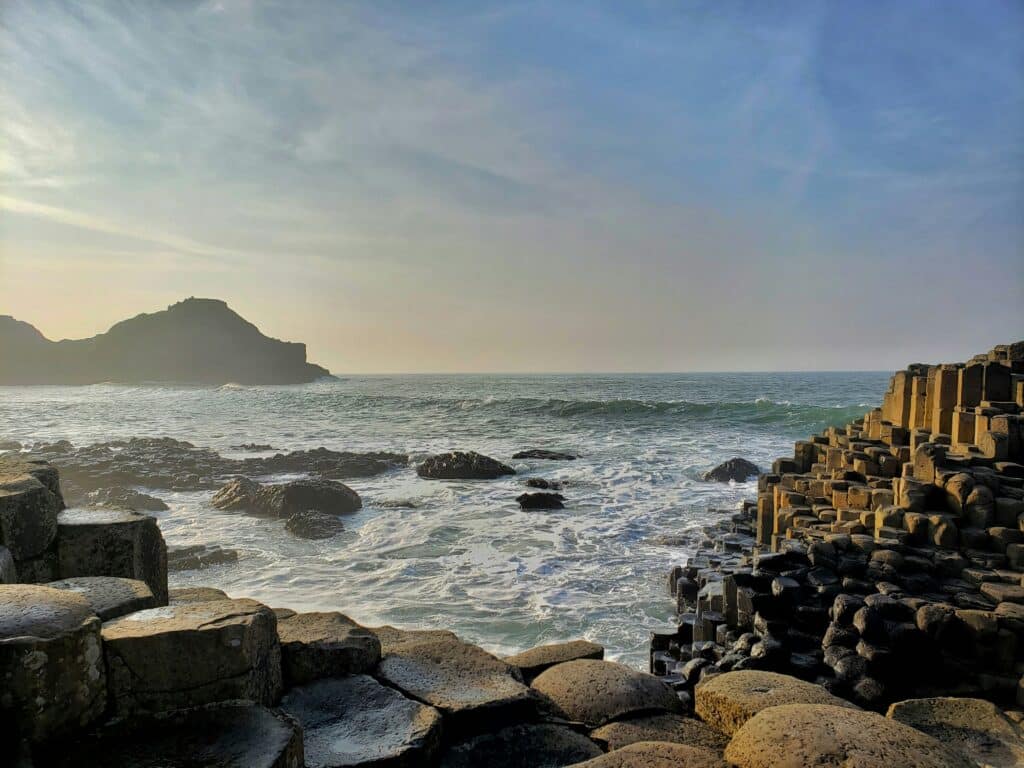
The Giant’s Causeway, located on the Antrim Coast of Northern Ireland, stands as a remarkable natural wonder, distinguished by its extraordinary geological formations. This UNESCO World Heritage Site comprises approximately 40,000 interlocking basalt columns, predominantly hexagonal in shape, that dramatically emerge from the sea and stretch along the coastline. These unique pillars are the result of intense volcanic activity that occurred around 50 to 60 million years ago; as molten lava cooled and contracted, it fractured into these incredibly precise polygonal forms. Beyond its scientific significance, the Giant’s Causeway is steeped in local folklore, with legends attributing its creation to the mythical giant Finn McCool, who supposedly built the causeway as stepping stones to Scotland.
Table Mountain – Cape Town, South Africa
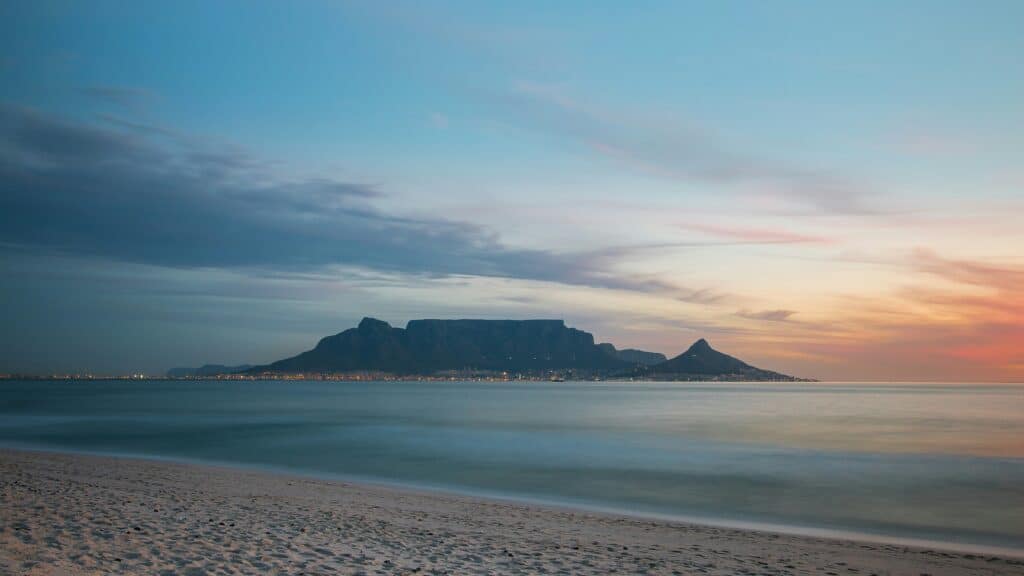
Table Mountain, majestically overlooking Cape Town, South Africa, is recognized as one of the New7Wonders of Nature due to its unique geological features and exceptional biodiversity. Its iconic flat-topped summit, which stretches approximately three kilometers across, is a result of millions of years of erosion that wore away softer rock layers, leaving behind incredibly durable sandstone. Beyond its striking appearance, Table Mountain is a vital component of the Cape Floral Region, a UNESCO World Heritage Site and the smallest yet richest floral kingdom on Earth. It is home to an astonishing array of plant species, many of which are endemic and found nowhere else in the world, including the unique fynbos vegetation. This combination of distinctive geology and unparalleled flora makes Table Mountain a truly irreplaceable natural wonder.
Victoria Falls – Zimbabwe and Zambia – Natural Wonders of the World
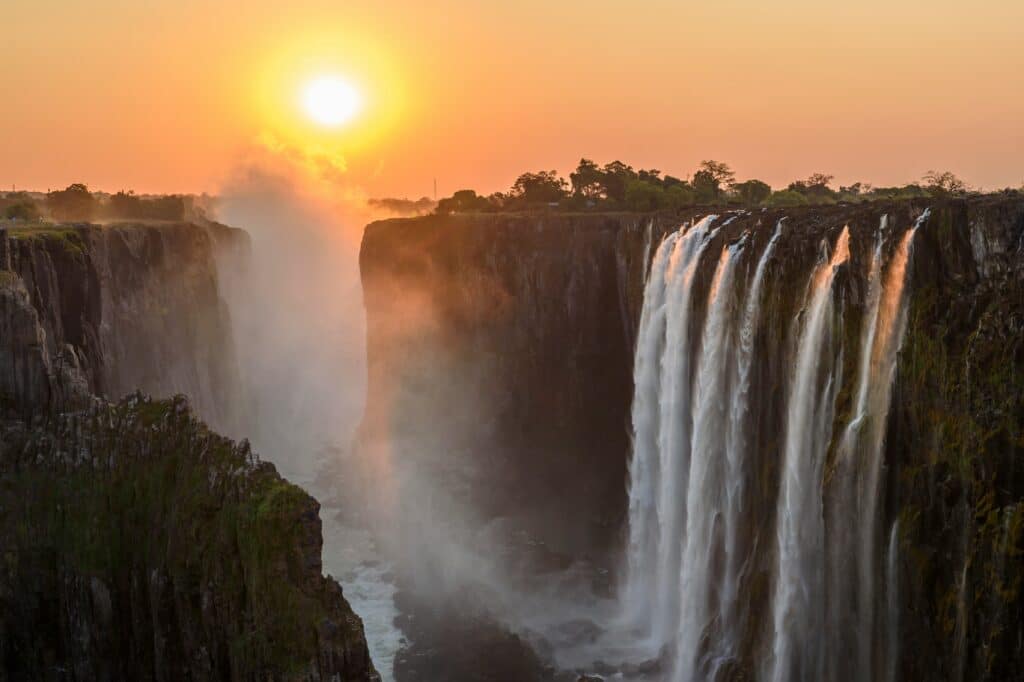
Victoria Falls, locally known as “Mosi-oa-Tunya” or “The Smoke that Thunders,” is an extraordinary natural wonder located on the Zambezi River, forming the border between Zambia and Zimbabwe. While not the highest or widest waterfall in the world, it is classified as the largest single sheet of falling water, stretching an impressive 1,708 meters (5,604 feet) wide and plunging over 100 meters (350 feet) into a narrow gorge. The immense volume of water creates a colossal cloud of spray that can be seen for many kilometers, giving rise to its evocative local name and often producing spectacular rainbows, including rare lunar rainbows at night. This awe-inspiring display of nature’s power and beauty, along with the unique geological formations of its zigzagging gorges, has earned Victoria Falls its rightful place among the world’s most magnificent natural attractions.
Galapagos Islands – Ecuador
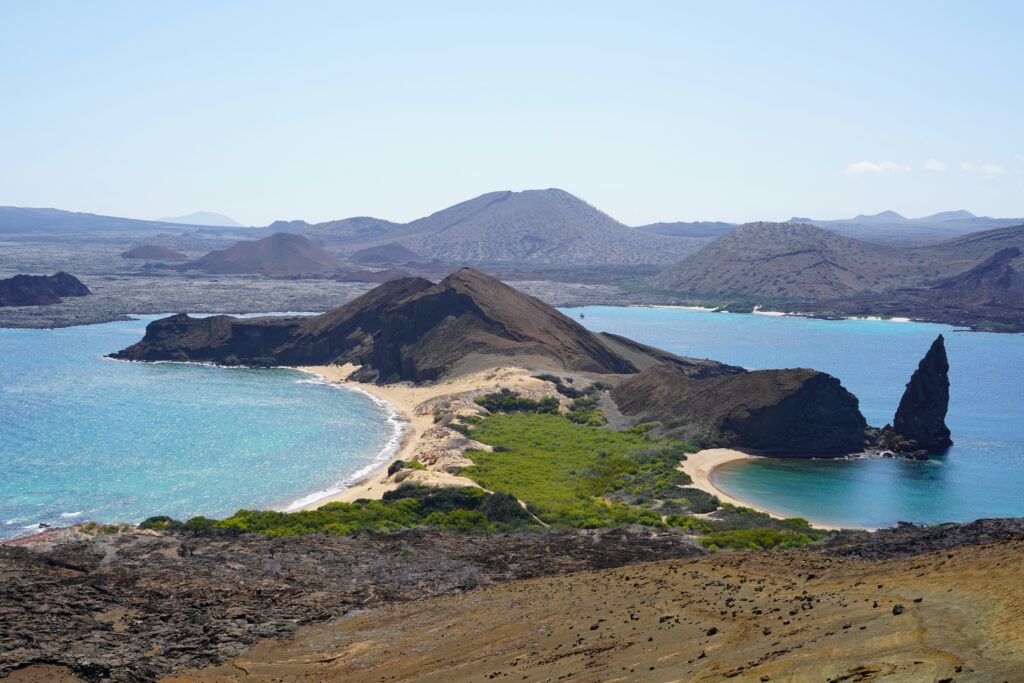
The Galápagos Islands, a remote volcanic archipelago in the Pacific Ocean off the coast of Ecuador, are universally recognized as an unparalleled natural wonder due to their extraordinary and unique biodiversity. These isolated islands served as a crucial “living laboratory” for Charles Darwin, whose observations of their distinct species, particularly the finches and tortoises, were instrumental in shaping his groundbreaking theory of evolution by natural selection. The islands are home to an astonishing array of endemic wildlife, including the iconic giant tortoises, marine iguanas, blue-footed boobies, and flightless cormorants, many of which have evolved with little fear of humans due to their historical isolation. The remarkable adaptations and diversity of life found here, set against a backdrop of rugged volcanic landscapes, make the Galápagos a truly irreplaceable ecological treasure and a powerful testament to the forces of natural evolution.
Grand Canyon – Arizona, USA – Natural Wonders of the World
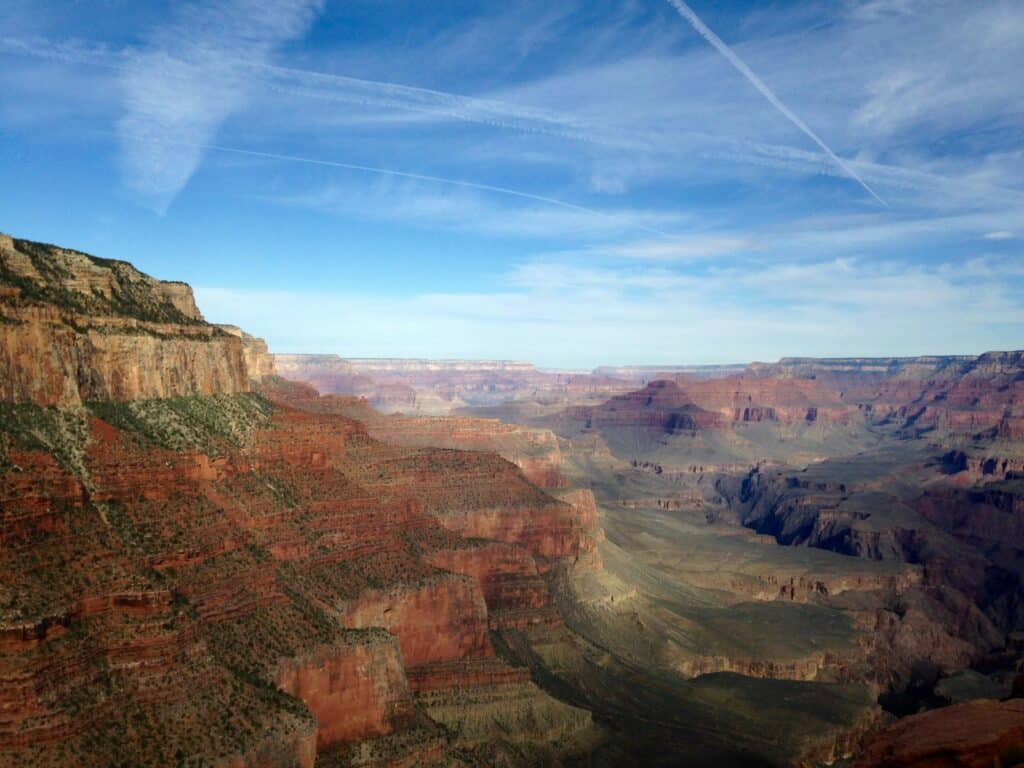
The Grand Canyon, carved by the Colorado River in Arizona, USA, stands as an iconic and monumental natural wonder, celebrated for its immense scale and the striking geological history it reveals. This colossal chasm stretches approximately 446 kilometers (277 miles) in length, measures up to 29 kilometers (18 miles) wide, and reaches depths of over 1,857 meters (6,093 feet), exposing billions of years of Earth’s geological past in its multi-layered rock formations. The sheer magnitude of the canyon, combined with its vibrant hues that shift with the changing light, offers breathtaking panoramic vistas from its rim and a profound sense of natural grandeur. Its unique stratigraphy provides an unparalleled record of geological processes, making it not only a visual spectacle but also an invaluable site for scientific study, solidifying its status as one of the planet’s most magnificent and awe-inspiring natural landmarks.